Most age-verification procurement still starts with the wrong question: which method do we buy? Face scan or document upload. Estimation or ID. Pick one, wire it to the signup flow, ship it, move on. It is a clean decision that produces a broken control, because the premise is wrong. Age assurance is not a method you select. It is a system you orchestrate.
Regulators have now said this out loud. In their March 2026 joint statement, Ofcom and the ICO wrote that “there is no single age assurance method or process that eliminates the risk of circumvention,” and that there is “a strong argument for layers of protections across the system.” The EU’s DSA guidelines ask for measures that are “effective, reliable, robust, non-intrusive and non-discriminatory” and proportionate — a combination no single method delivers. The bar didn’t just rise; it changed shape. The unit of compliance is no longer the check. It is the decision layer that sits above the checks and decides which one runs, for whom, and when.
This is the architecture of that layer: why one method can never win, how to structure the waterfall, how to route on risk instead of running everyone through the same gate, and how to do it without quietly rebuilding a surveillance database in the process.
Why one method can never win
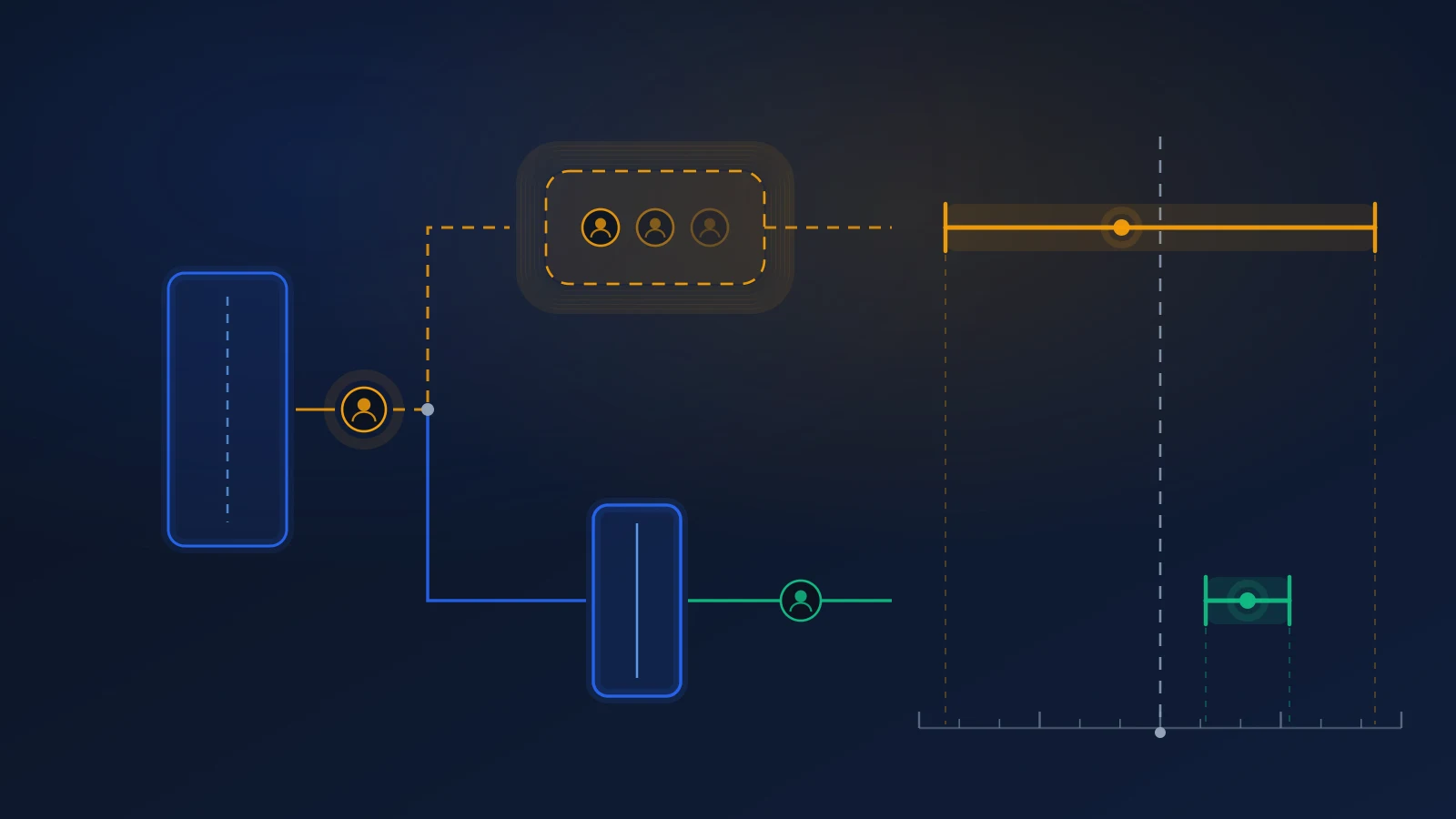
Every age-assurance method is a bundle of four properties, and the four are in tension: assurance (how confidently it proves the fact), friction (how much it costs the user in effort and drop-off), cost (what you pay per check), and coverage (how many of your users it actually works for). Optimize one and you pay in the others. There is no row in the table that wins every column, which is precisely why “pick a method” is a category error.
Walk the options.
Facial age estimation is cheap, fast, and frictionless — public pricing lands around ten cents a check, and the user just looks at a camera. But it estimates rather than proves. NIST’s Face Analysis Technology Evaluation puts mean absolute error at roughly 1.9 to 2.7 years for the 13–24 band, which is why responsible deployments only pass someone as “over 18” when the model reads them at 25 or higher — the challenge-age buffer. That buffer is honest engineering, but it means estimation is weakest exactly where it matters most: the 16-to-20-year-olds sitting closest to the line. It is also not proof for a hard legal threshold, and it carries documented fairness gaps across skin tone, age band, and lighting.
Document and NFC verification sit at the other end. Reading the chip in a passport and matching a live face to it is the gold-standard proof — high assurance, defensible for any threshold. It is also the highest-friction path you can put in front of a user. Signicat’s research across European consumers found 68% have abandoned a digital onboarding process, with 38% blaming a lack of the required documents. It costs more per check, and it structurally excludes everyone who doesn’t hold a government ID — a coverage problem that is also a fairness problem.
Reusable credentials and returning-user tokens are the cheapest and lowest-friction option of all — a returning user re-proves the fact in milliseconds with nothing to re-collect. That is the verify-once, prove-everywhere model, and the EU is about to make it mainstream: every member state must offer an EU Digital Identity Wallet by 6 December 2026. But a credential only helps if one already exists. On a cold first contact with a new user, it resolves nothing.
Line them up and the pattern is unmistakable. Estimation wins on friction and cost, loses on assurance near the threshold. Documents win on assurance, lose on friction and coverage. Credentials win on everything except the case that matters most — the user you’ve never seen. A single-method deployment picks one row of that table and inherits all of its weaknesses for 100% of your traffic. The user who would have sailed through a face scan is forced to dig out a passport; the determined 15-year-old who would have been caught by a document check is waved through by an estimator reading them generously. You lose real adults and you pass real minors, at the same time, because you asked one tool to do a job that requires several.
The orchestration layer, defined
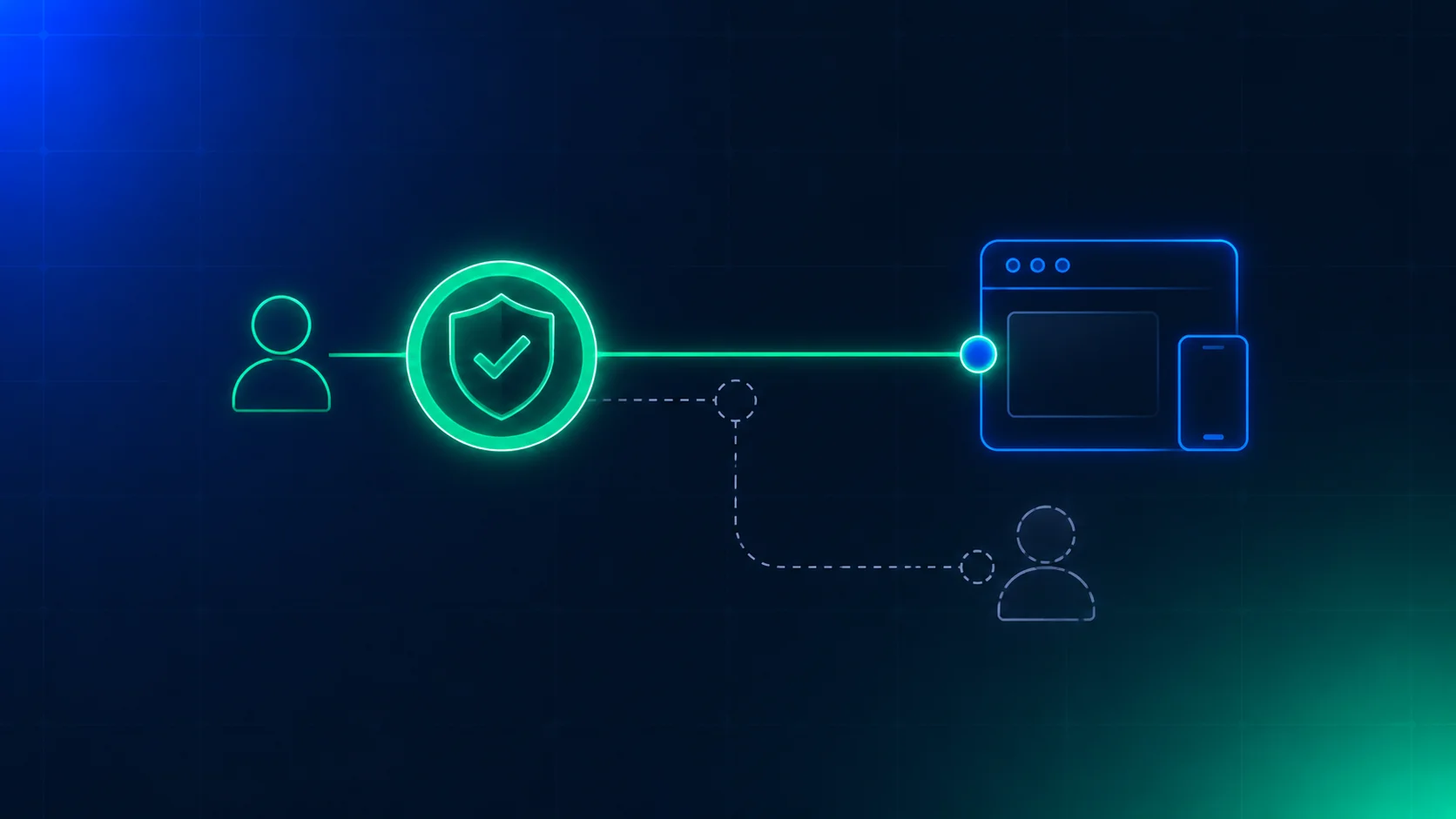
An orchestration layer is the decision logic that sits between your product and the verification methods. For each user, it does four things: it reads context and risk signals, it selects the cheapest method that meets the assurance the surface actually requires, it escalates to a stronger method only when the first one comes back ambiguous or the risk warrants it, and it returns a single normalized outcome — a threshold result, the method that produced it, and the assurance level — so nothing downstream needs to know or care which path fired.
The distinction from a flat integration is the whole point. A single-vendor checkbox asks every user the same question with the same tool and accepts whatever comes back. An orchestration layer treats the methods as interchangeable means to an end — is this person over the line? — and spends the minimum necessary to answer it for each individual. The methods become plug-in strategies behind a stable contract. Add a wallet in December, swap an estimation model, tighten a buffer for one jurisdiction: the product code above the layer never changes, because it only ever sees the normalized decision.
The waterfall: cheap and frictionless on top, assured underneath
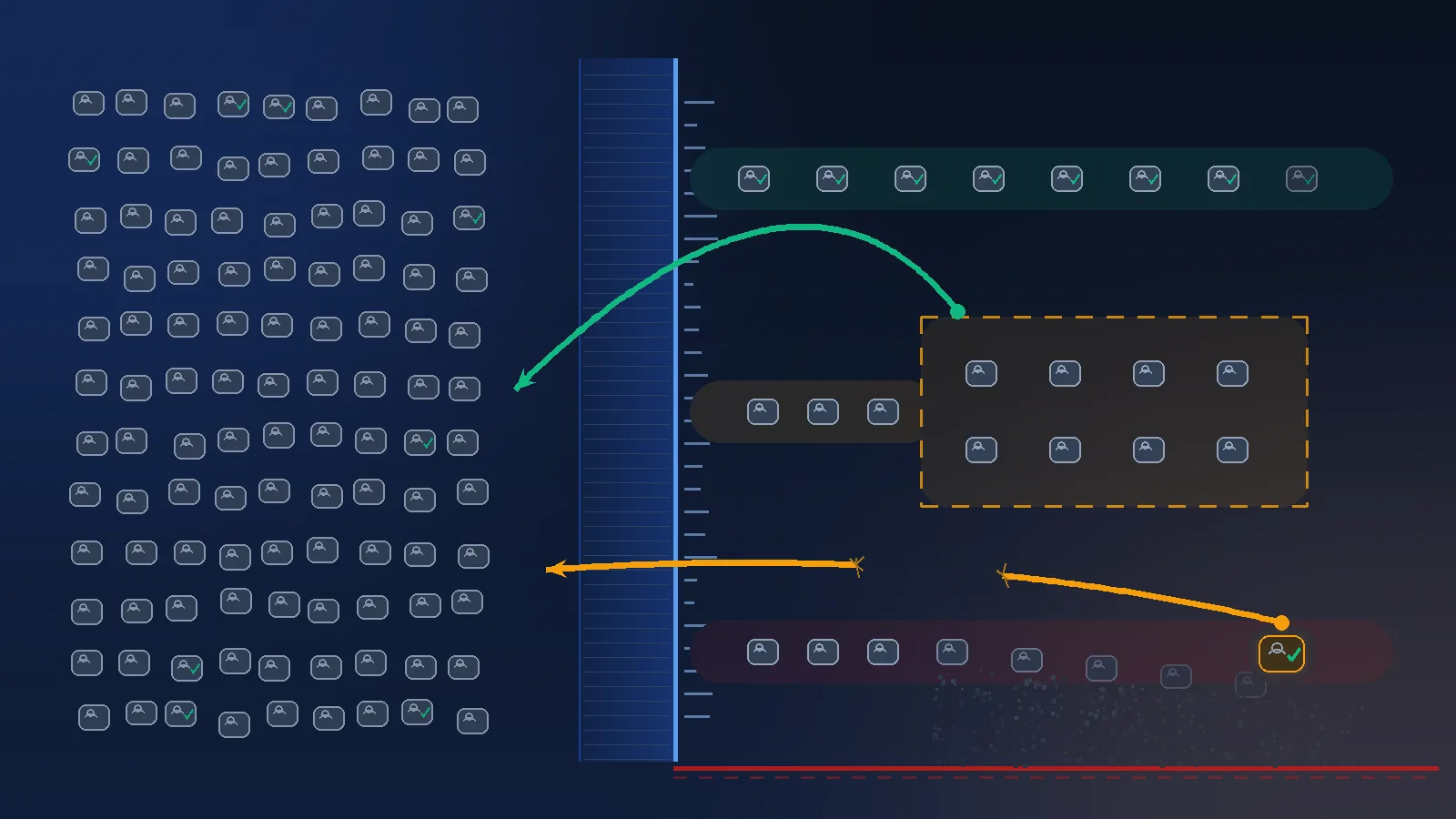
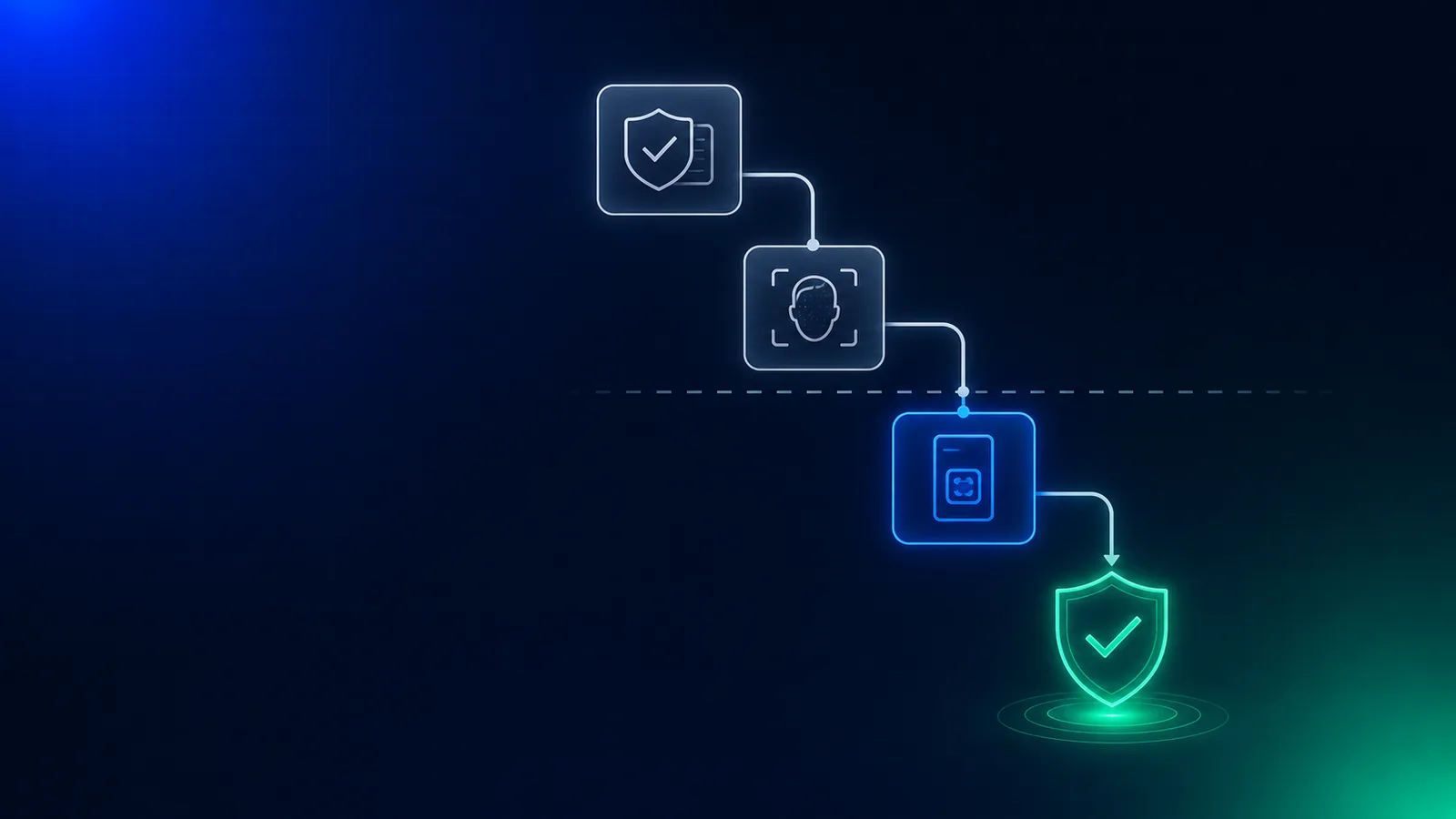
The core pattern is a waterfall. Order the methods from lowest friction and cost to highest assurance, run them in sequence, and short-circuit the moment the required bar is cleared. Most users never reach the bottom, and that is the source of both the higher pass rate and the lower blended cost.
A canonical four-tier waterfall:
- Tier 1 — Returning user. If the person already holds a valid reusable token or presentable wallet credential, resolve instantly. No capture, near-zero cost, no new data collected. On mature traffic this clears a large share of verifications before any camera turns on.
- Tier 2 — Passive estimation. For the broad middle — new users comfortably clear of the threshold — facial age estimation (or a wallet age attestation) answers the question in seconds at low cost.
- Tier 3 — Step-up proof. Anyone who lands inside the challenge-age buffer, trips a risk signal, or hits a surface with a hard legal threshold escalates to document plus NFC plus liveness. This is your defensible, high-assurance tier — and because the waterfall only sends the cases that need it, you pay the expensive price on a minority of traffic, not all of it.
- Tier 4 — Assisted fallback. Anyone the estimator serves poorly, or who lacks a standard document, routes to an accessible, inclusive path rather than a dead end. Fairness and WCAG are not the exception handler you bolt on later; they are a designed tier.
The boundary between Tier 2 and Tier 3 is the challenge-age buffer, and it is the single most important tuning parameter in the system. Set it wide and you push more users into step-up: lower false-acceptance, higher friction and cost. Set it narrow and you do the reverse. That trade is not a philosophy debate; it is a dial with numbers on both sides, and the right setting is the one that holds false acceptance under your target while keeping escalation volume inside what the business can absorb.
The economics are the part procurement usually misses. Suppose 45% of your verifications resolve at Tier 1, another 35% clear at Tier 2, and only 20% escalate to the expensive Tier 3 proof. You have just delivered document-grade assurance where it matters while paying document-grade prices on a fifth of your volume — and you passed the 80% cheaply and with almost no friction, which is exactly the population most likely to abandon a heavyweight check. A single-method document deployment would have charged you full price for every user and driven a third of them out the door at the verification step. The waterfall is not a compliance nicety. It is the lowest-cost, highest-conversion way to reach the same assurance.
Route on risk, not on a coin flip
The waterfall describes the order of methods. Risk-based routing decides when a given user skips ahead. The same signup does not warrant the same scrutiny for every person or every surface, and orchestration is where you encode that.
The signals worth routing on are concrete. Required threshold and surface sensitivity: a +12 content filter and a +18 alcohol sale do not need the same proof, and forcing the heavier check on the lighter surface is friction you are simply giving away. Distance from the threshold: an estimated age of 34 against an 18 line is a different decision than an estimated 19, and only the second needs to escalate. Circumvention signals: VPN or proxy indicators, retry patterns, and shared-device or proxy-verification behaviour. History: returning versus first-seen. Jurisdiction: the assurance level the applicable regime demands.
That circumvention signal is not hypothetical, and it is the clearest sign the regulators have already adopted the orchestration model. In July 2026 the UK settled the VPN question: it will not ban or age-gate VPNs, and instead puts “an onus on platforms in scope of the new restrictions to take robust steps to detect and prevent attempts by underage users to circumvent age assurance.” The regulator’s own description of “robust steps” is a routing rule — services can detect VPN use, assess risk using behavioural clues, and give flagged users the option to verify their age or prove their location. Read that as an architect: a signal fires, and the system escalates that user to a stronger tier. The evidence backs the approach over a VPN crackdown — UK and Australian findings point to weak, single-layer checks, not VPNs, as the main reason kids get through, and the same research shows children themselves rate the stronger methods as the most effective. A ban-the-VPN law like Utah’s SB 73 treats circumvention as a legal problem. Orchestration treats it as an engineering one: detect the signal, raise the tier, bind the result.
Layering is now the expected posture, not an optimization
It is tempting to read all of this as performance tuning — a way to shave cost and lift conversion. It is that. But in 2026 it is also the compliance posture regulators are explicitly steering toward, which means the waterfall does double duty.
The Ofcom–ICO joint statement doesn’t merely permit layering; it argues for it, and it adds a design instruction: choose methods that “sufficiently guard against fake input” and that bind the proof. That is a direct nod to orchestration plus session binding — a passed check that isn’t bound to the person actually using the product is a check a determined minor can borrow or replay. The first-year Online Safety Act effectiveness review reinforced the same lesson: the simplest checks are the ones that fail.
The EU arrives at the identical place by a different road. The DSA guidelines demand measures that are effective, reliable, robust, and proportionate and non-intrusive — and the only way to satisfy “robust” and “non-intrusive” simultaneously is to vary the method by risk, which is orchestration by definition. Even the Commission’s own age-verification app ships as a set of methods, not one: national ID, passport with biometric matching, or attestation through a trusted third party such as a bank. Proportionality is not a slogan you put in a policy document. It is a routing table you implement in code. The regulators have described the destination; the orchestration layer is the vehicle.
What layering must not become
There is a failure mode here, and it is worth naming before it bites. “Layered” must never quietly become “collect everything from everyone.” The wrong reading of a waterfall is to run all four tiers on every user and hoard the results — which is how you end up holding a pile of face scans and ID images that becomes the data-retention liability at the center of the 2026 breach wave. Layering means the opposite: escalate only when the cheaper tier can’t answer, and store the decision, not the identity. The correct artifact from any tier is a threshold result — over or under the line — written to an audit log, not a retained date of birth or a document image. That is the privacy-first, no-surveillance architecture the model is supposed to produce, and it is a feature of the design, not a constraint on it.
The other pitfalls are tuning failures, and each has a dial. Escalation that dead-ends a wrongly-rejected adult is a false-positive lockout — fix it with a real Tier 4, not an error page. Step-up so aggressive it destroys conversion is a buffer set too wide. A waterfall that lets a minor take unlimited shots at the estimator until one reads high is a retry-budgeting failure — orchestration without rate limits hands the buffer away for free. Layering is powerful precisely because each tier is a decision you can measure and tune; it is dangerous in exactly the same way if you never look at the numbers.
A reference architecture you can build
Strip it to the components. A policy config, per surface: the required threshold (+12/+15/+18/+21/+25), the challenge-age buffer, the ordered list of allowed methods, and the risk rules that trigger escalation. A decision engine that walks the waterfall, applies the routing signals, and short-circuits on success. A normalized decision contract — { threshold_result, method, assurance_level, model_or_ruleset_version } — that every tier resolves to, so your product integrates once and never branches on which method ran. A binding step that ties the outcome to the session or account so the proof can’t be handed off. And observability: pass rate and blended cost per tier, escalation rate, drop-off, retry and attack rates, and subgroup breakdowns — because a tier you can’t see is a tier you can’t tune, and the same instrumentation is what lets you prove the whole system works when a regulator asks. If a prospective vendor can’t expose these numbers for their own deployed methods, that gap belongs at the top of your vendor security review.
The tell that you’ve built an orchestration layer rather than a bigger checkbox is simple: your product code contains no reference to “face scan” or “passport.” It asks one question — is this person over the line for this surface? — and the layer beneath it decides how to find out.
How Xident is built for this
Xident is designed as the orchestration layer rather than a single method wearing a UI. Age comes back as a threshold classification — over or under 12, 15, 18, 21, or 25 — with a configurable challenge-age buffer you set per surface, so the routing boundary between “pass on estimation” and “escalate to proof” is a policy you tune, not a vendor default you inherit. The waterfall is native: client-side estimation for the broad middle, automatic escalation to document OCR, face match, and NFC for the buffer band and hard thresholds, and a reusable token at the top so returning users re-prove the fact without re-collecting anything. Server-side liveness and retry budgeting on the Growth and Scale tiers are the circumvention layer — the “robust steps” a regulator now expects, expressed as routing rules rather than promises.
Every path resolves to the same record — a threshold result, the method, and the assurance level, written to an audit log rather than a retained identity — so downstream systems integrate once and stay ignorant of which tier fired. The analytics layer surfaces pass rate, escalation, drop-off, and blended cost per method, so the dials in this post are ones you actually watch. One integration, several methods, a decision layer that spends the minimum to clear the bar for each user — and a layered posture that maps directly onto what Ofcom, the ICO, and the EU now say a serious age-assurance system looks like.
The 2026 question is not “which age-verification method should we buy?” It is “what does our decision layer do when the first method comes back ambiguous?” A single check is an answer to one column of a four-column problem — you optimize assurance and surrender conversion, or optimize friction and surrender proof, and call the trade-off a strategy. The waterfall refuses the trade. Cheap and frictionless on top for the users who deserve to sail through, assured and adversary-resistant underneath for the ones who don’t, fair and accessible at the edges for everyone a single model would fail — routed by risk, bound to the session, and recorded as a decision rather than a dossier. That is how you pass more real people, spend less per verification, and hand a regulator a system instead of a checkbox.
This post is general information about age-assurance architecture and public policy, not legal advice. Regulatory expectations and guidance differ by jurisdiction and continue to evolve; consult qualified counsel for your specific obligations.