Blog

Insights & Updates

Insights on age verification, identity verification, compliance, and building trust online.

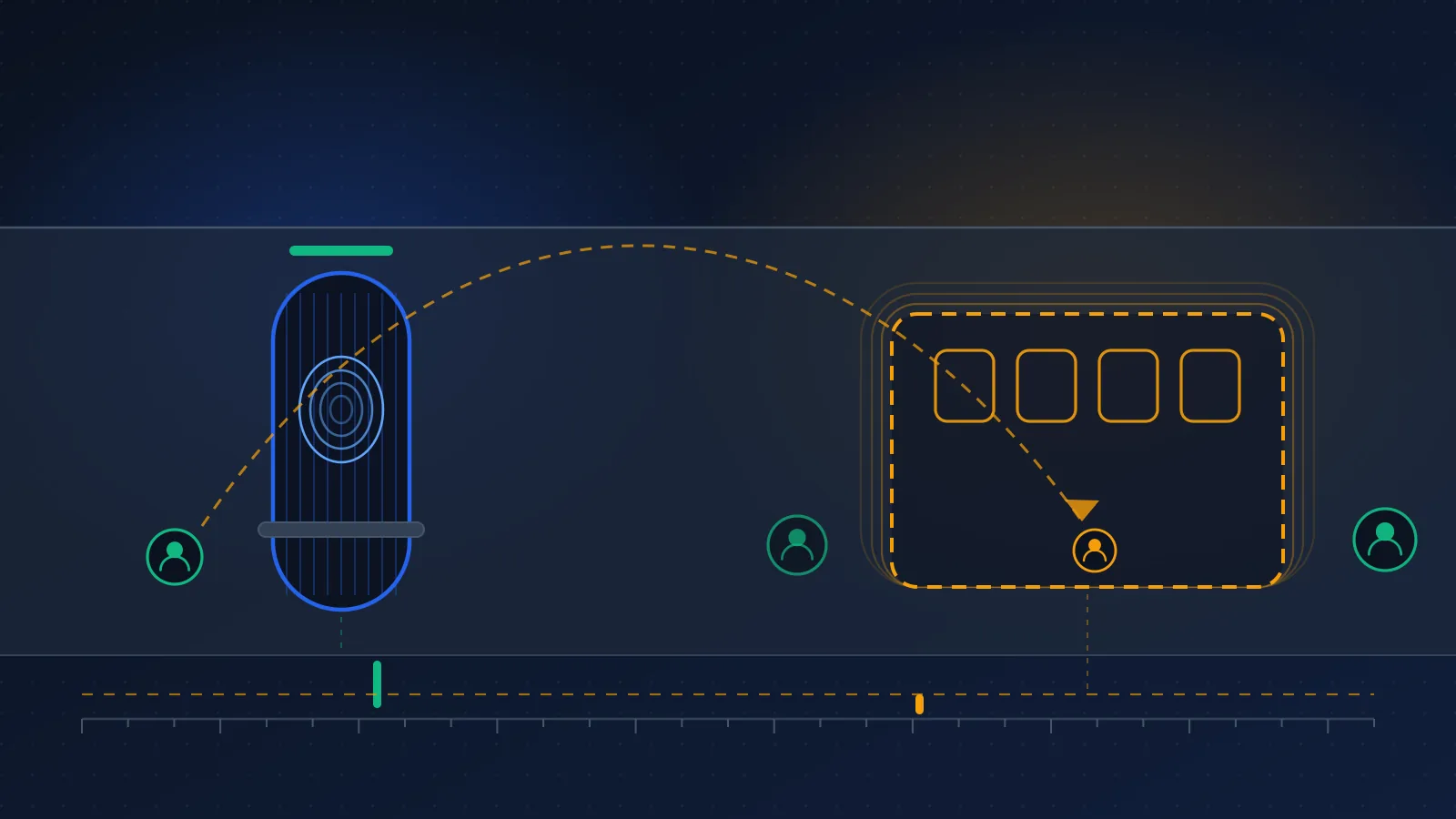
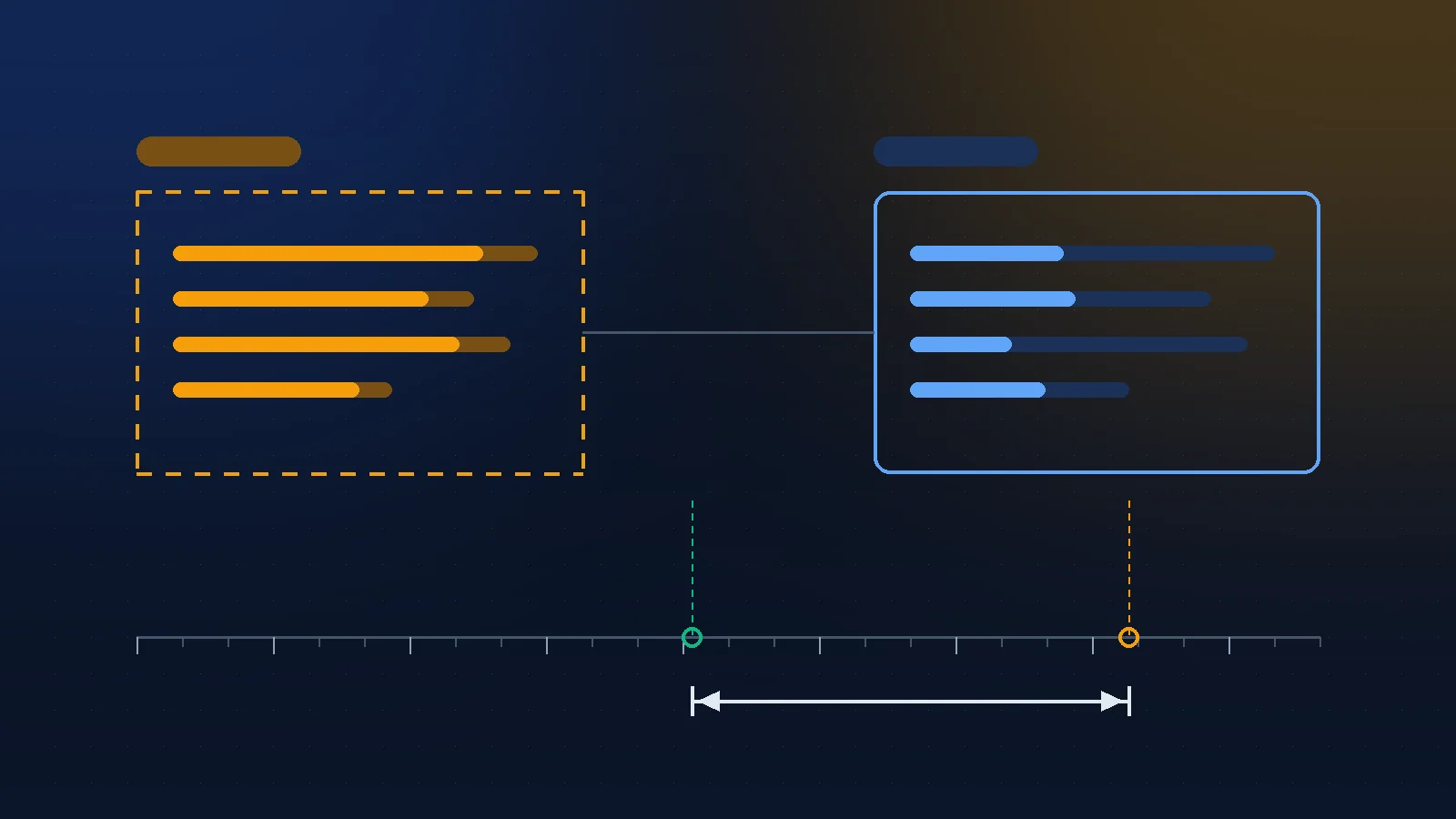
Editorial illustration on a deep slate-navy background: a marketing claim panel and a system log panel sit side by side, joined by a measuring line that shows a visible gap between them. Abstract geometric shapes, no faces, no people, no readable text.
compliance ·

The Claim Is the Violation: What Texas v. TikTok Means for Every Page That Says Your Age Check Works

On 10 September 2026 a Texas judge granted summary judgment against TikTok under the state's Deceptive Trade Practices Act. Not for failing to protect children, but for describing protections that did not behave the way the description said. Two weeks earlier, Meta's $18 billion settlement put an independent auditor in charge of checking whether its child-safety measures actually run. Together they move the legal question from 'do you have an age gate' to 'does your age gate do what your marketing page, your help centre and your parental controls screen say it does'. Here is where your age-assurance claims live, which ones are unsafe, and how to write claims you can still defend when someone reads your logs.

age-assurance age-verification deceptive-trade-practices
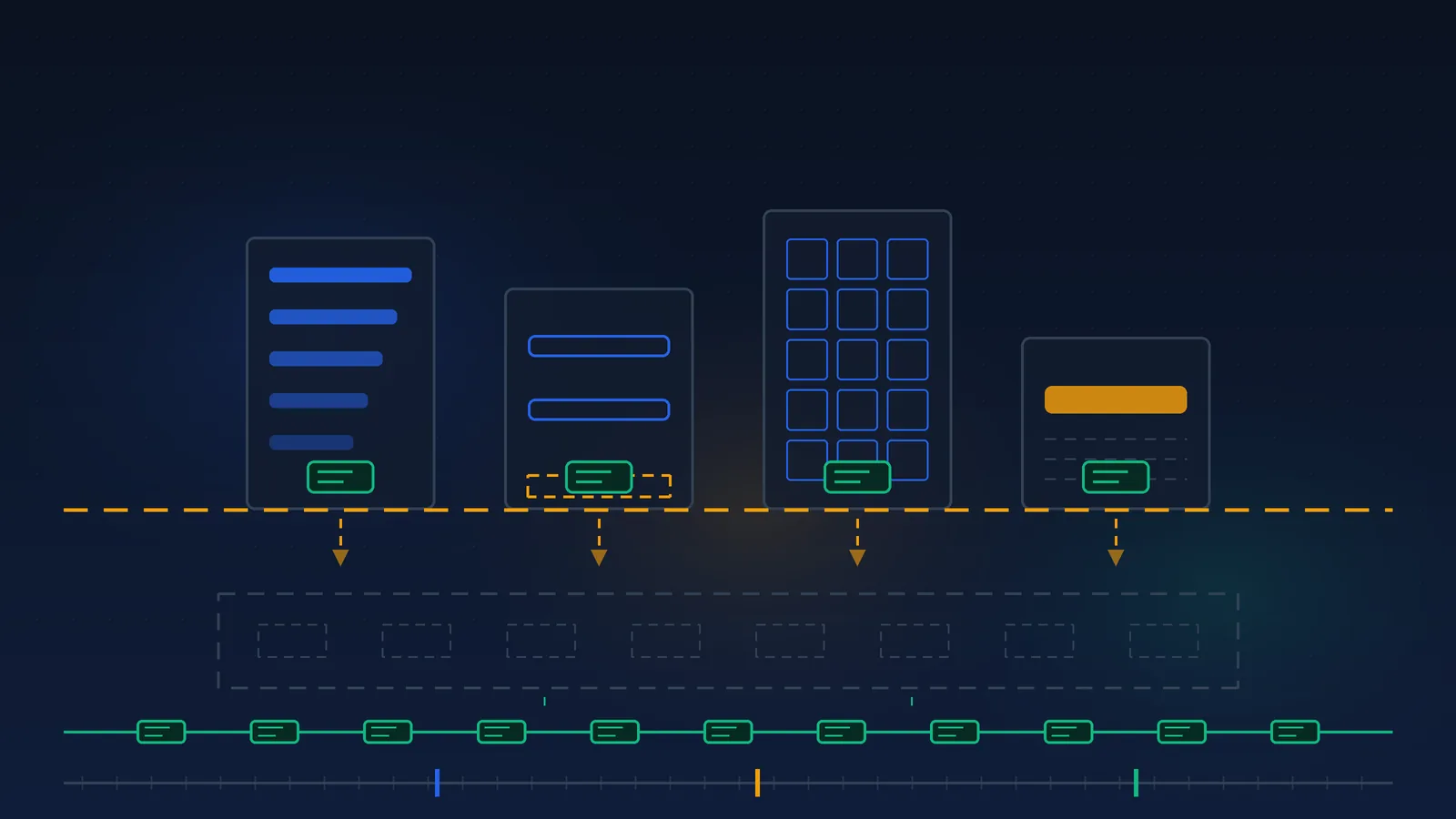
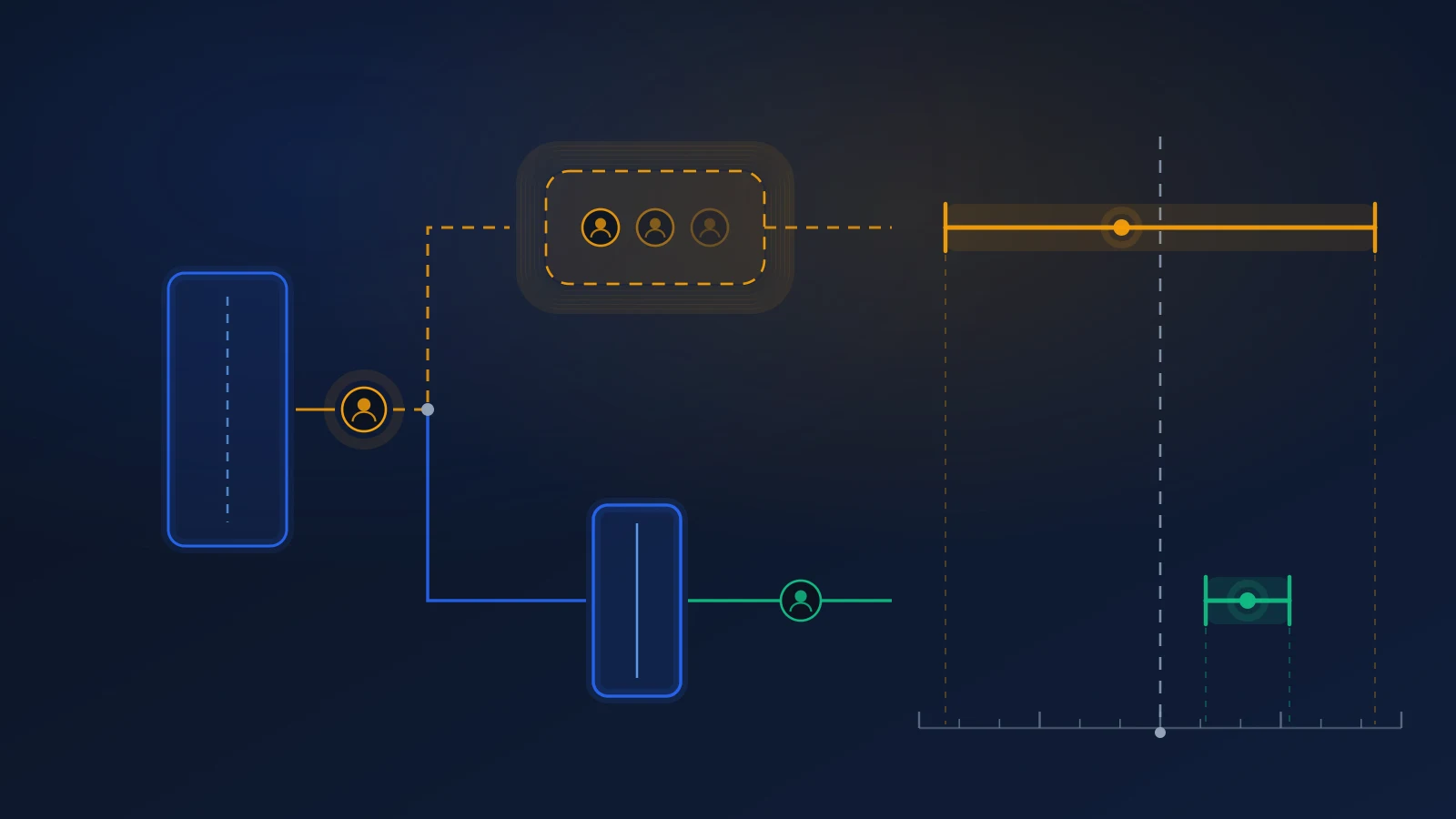
Editorial illustration on a deep slate-navy background: four vertical gate shapes of different heights standing in a row, each passing a small token downward to a single flat tray below that is empty, with a dashed line marking the boundary between the gates and the tray. Abstract geometric shapes, no faces, no people, no readable text.
compliance ·

Australia's App Store Age Checks Are Live. The Store's Check Is Not Your Check.

On 9 September 2026 the last obligation in Australia's Age-Restricted Material Codes came into force, and four storefronts started checking whether a user is an adult before allowing an 18+ download. Apple reads account signals. Google returns a bracket only when a parent chose to share it. Microsoft routes through Yoti and VerifyMy. Valve asks for a credit card and nothing else. Four methods, four different confidence levels, and the same value in the column that matters: what the developer receives is nothing. The gate also keys off an app rating that a University of Sydney study found wrong on 20% of the top 100 App Store games and 48% of the top 100 Google Play games. Here is what the store check actually covers, why the app distribution code does not discharge the duty sitting on your own service, and how to use a store signal as a fast path without pretending it is evidence.

age-assurance age-verification australia
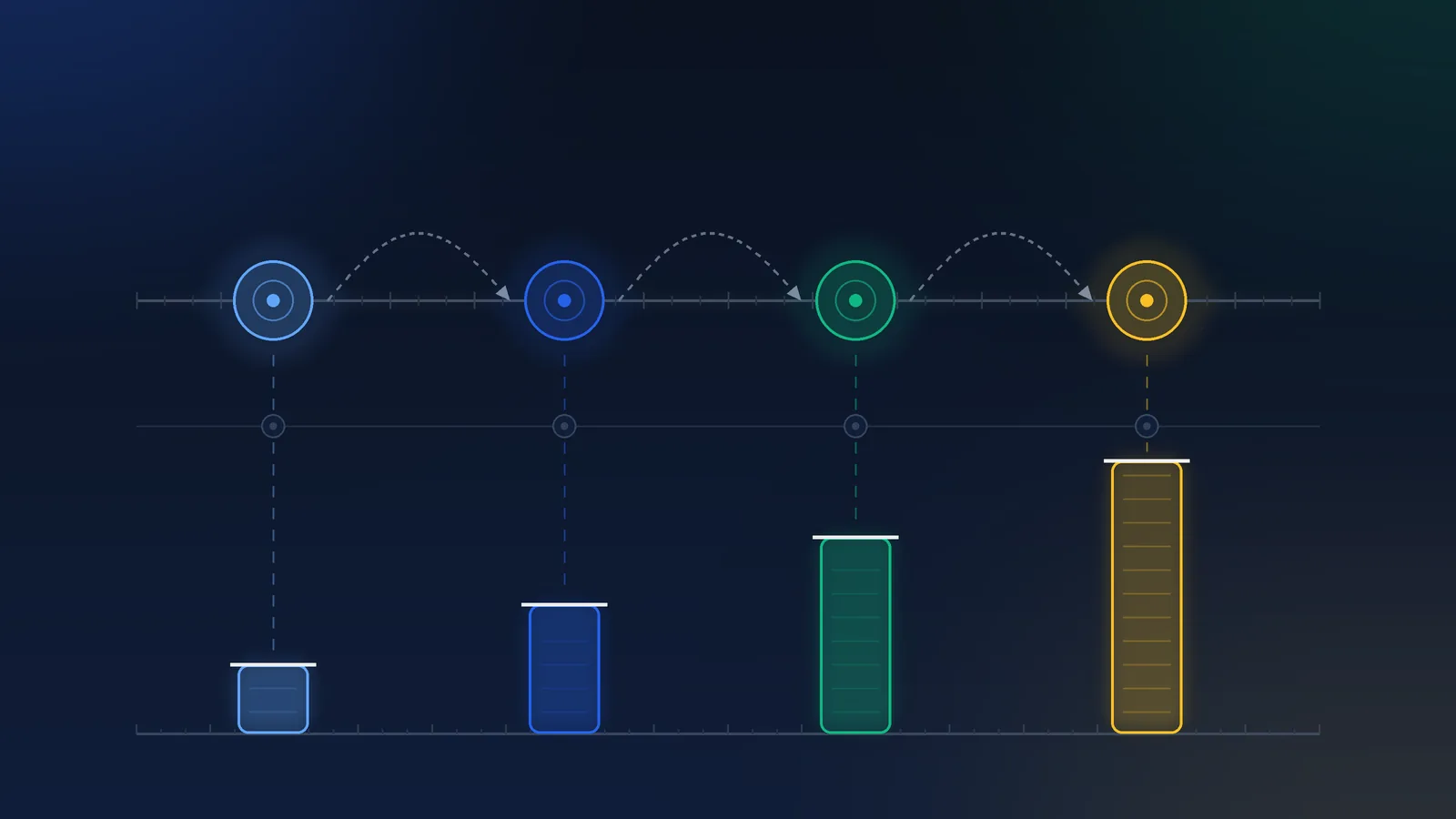
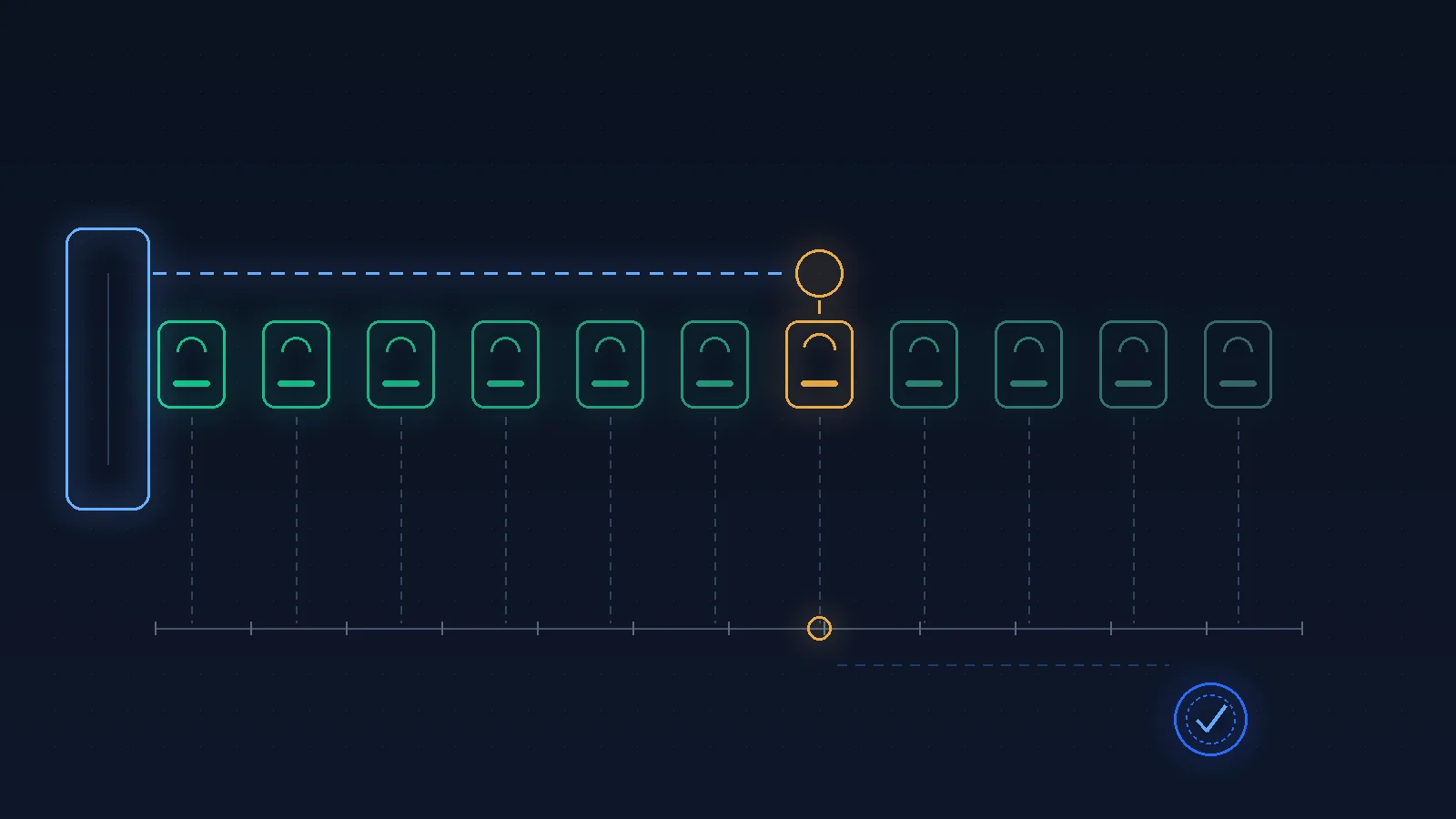
Editorial illustration on a deep slate-navy background: four identical circular verification tokens sitting on a horizontal rail, connected by dashed arcs showing the same token changing hands, with a row of dim unlit indicator rings on a flat line below and four bars of increasing height beneath them. Abstract geometric shapes, no faces, no people, no readable text.
engineering ·

13.2 Million Verified Accounts Sold in One Quarter. Your Age Gate Minted Some of Them.

In the first quarter of 2026, researchers counted 13.2 million account sales advertised as verified, KYC-passed or with two-factor authentication already attached. Observed revenue was 24.6 million dollars, which works out at 1.86 dollars per account. Retail averaged 2.49. Airline accounts averaged 11.54. A document verification is priced between 0.10 and 0.30 EUR depending on plan, so the asset your age gate produces resells for six to a hundred times its price, and every improvement you ship to the gate raises that number. The harder problem is not the fraud. A stolen account has a victim who complains and a sold account does not, so the detection stack you already own is pointed at the wrong event. Here is the difference between takeover signals and transfer signals, why a fixed re-verification calendar catches a handover six weeks late on average, and what to measure instead.

age-assurance age-verification account-resale
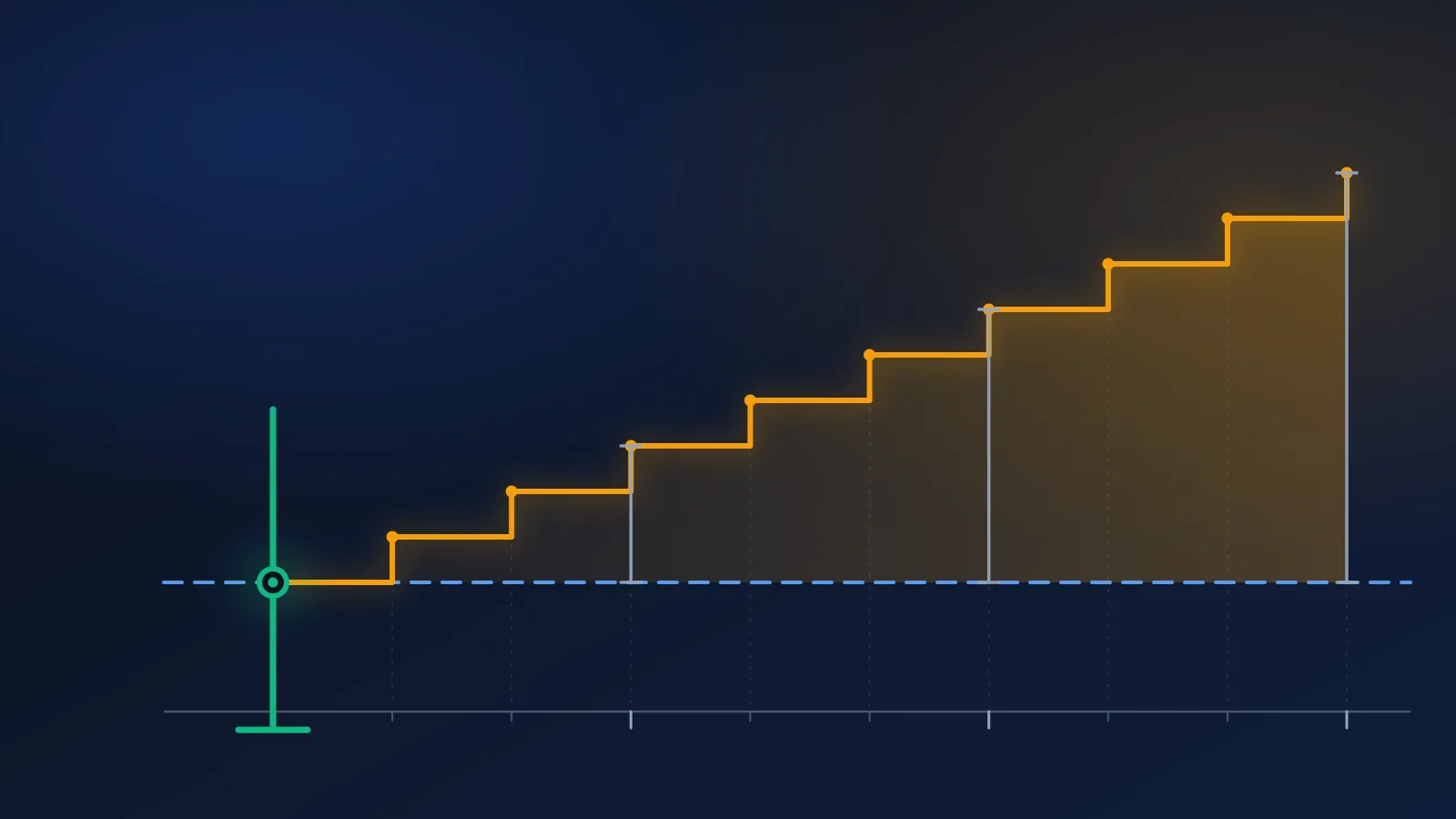
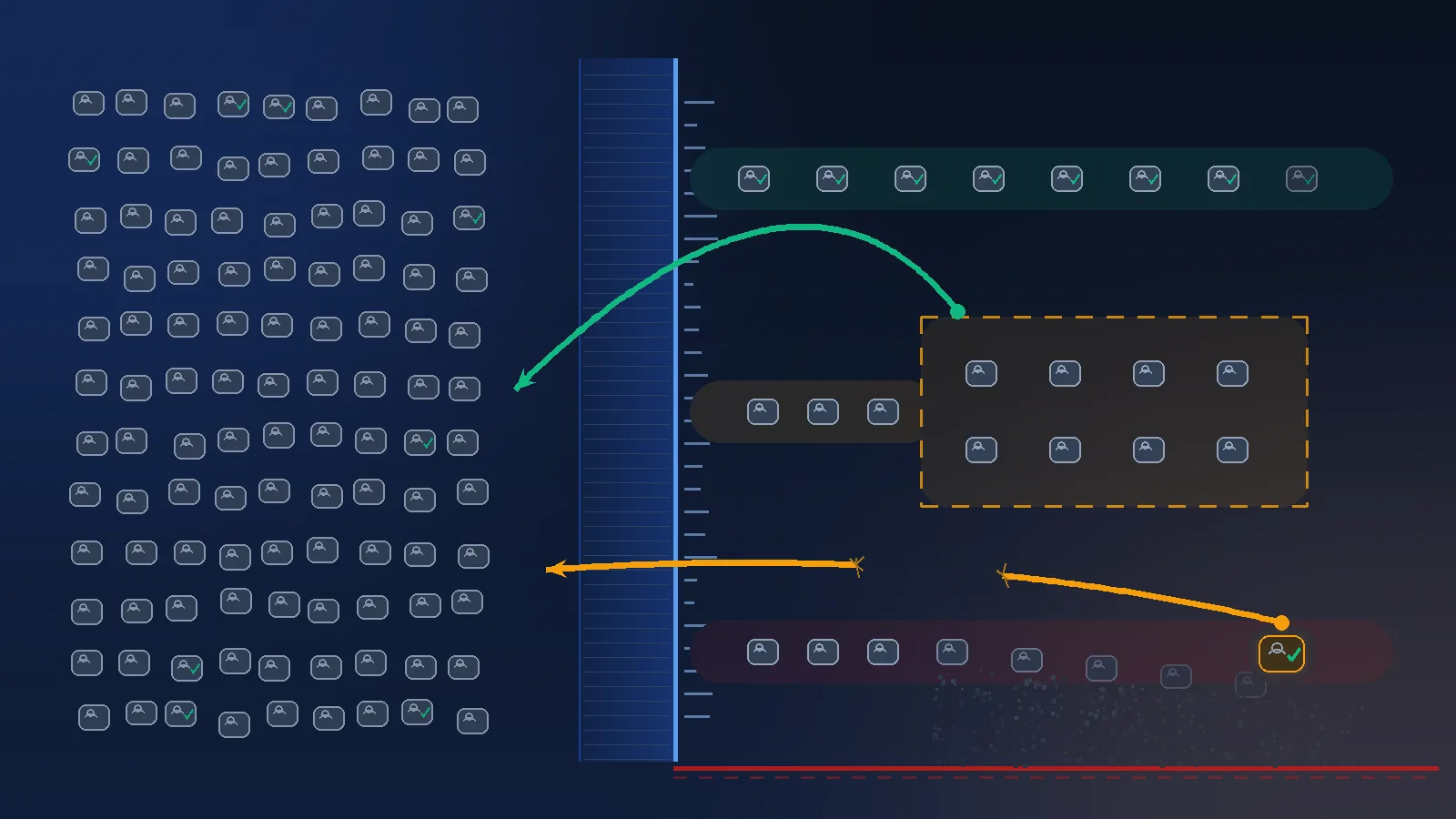
Editorial illustration on a deep slate-navy background: four horizontal bands stacked one above the other, each a different width, with four vertical lines rising from a baseline and each one stopping at a different band instead of passing through them all. Abstract geometric shapes, no faces, no people, no readable text.
compliance ·

Four Layers, Not Eight Laws: Why Your Age Gate Does Not Port to Asia-Pacific

Australia's social media minimum age law says a platform must not rely on government ID unless it also offers a reasonable alternative. Malaysia's Child Protection Code says age must be verified against government-issued records. Both are in force right now, and no single verification flow satisfies both. That contradiction is not an accident of drafting. It happens because eight Asia-Pacific regimes each put the age check at a different layer of the stack: the app store, the mobile carrier, the national ID rail, or the platform itself. Here is what each layer actually gives you, which national rails a foreign platform cannot reach at all, and the three assumptions in a European age gate design that break the moment you cross into the region.

age-assurance age-verification asia-pacific
Editorial illustration on a deep slate-navy background: a horizontal number line of evenly spaced tick marks representing years, with a single vertical bar fixed at one point while a second bar drifts steadily away from it to the right. Abstract geometric shapes, no faces, no people, no readable text.
compliance ·

'Over 18' Stops Being the Answer: The UK's Generational Age Check Arrives on 1 January 2027

Every age gate in production computes an age and compares it to a number. On 1 January 2027 the UK starts enforcing a rule that does not work that way: it is illegal to sell tobacco, herbal smoking products or cigarette papers to anyone born on or after 1 January 2009, online retailers included. That is not a threshold, it is a fixed date, and the gap between the two widens by a year every year. Here is what a cohort rule does to facial age estimation, to wallet credentials that only carry age_over_18, and to a checkout basket holding a vape and a pack of rolling papers.

age-assurance age-verification tobacco-and-vapes-act
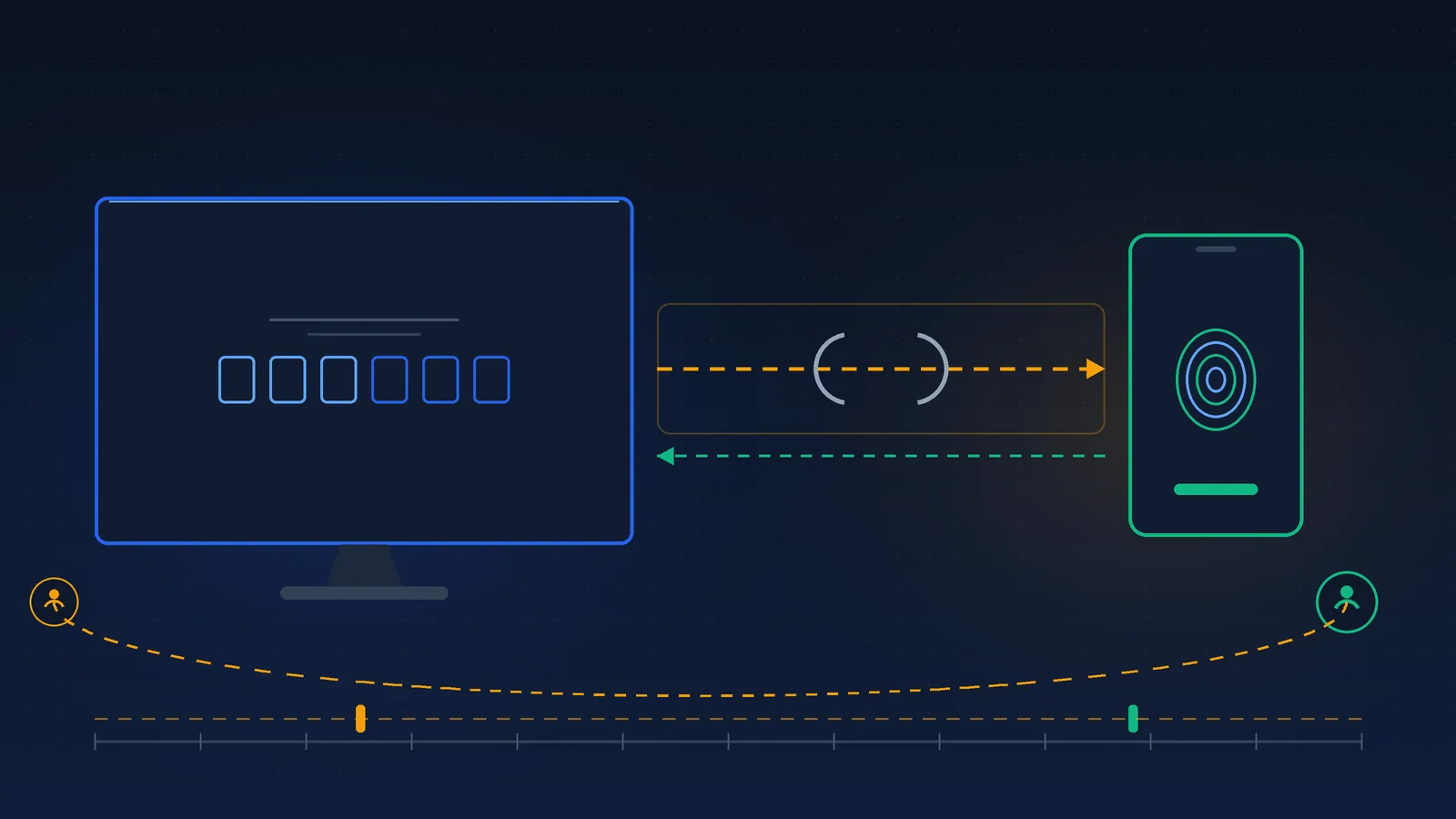
Editorial illustration on a deep slate-navy background: a large rectangular screen displays a short alphanumeric code, and a dashed line carries that code across empty space to a small handheld rectangle. The dashed line passes through a gap where a lock outline is drawn open. Abstract geometric shapes, no faces, no people, no readable text.
engineering ·

Enter This Code on Your Phone: The TV Age Check Nobody Threat-Modelled

A smart TV has no camera you can use for age estimation and no keyboard anyone will type a document number into. So the check moves to the user's phone, and the answer travels back over a channel neither device can authenticate. The standard way to do that is the OAuth device authorization grant, and device code phishing was one of the fastest-growing credential attacks of 2026. On 11 August the IETF published RFC 10027, a Best Current Practice on exactly this class of flow, and its opening example is a smart TV. Here is what it requires, why age assurance is a harder case than login, and what a living-room age check should actually do instead.

age-assurance age-verification cross-device
Editorial illustration on a deep slate-navy background: an abstract capture token travels left to right along a single path through three gateways. It passes cleanly through the first and would pass through the third, but the middle gateway is closed and holds it. Abstract, no faces, no readable text.
compliance ·

Your Age Estimator Is a Biometric Categorisation System. Article 50 Went Live on 2 August.

The Digital Omnibus entered into force on 27 July 2026 and pushed the AI Act's high-risk rules out to 2 December 2027. Six days later, on 2 August, Article 50 started applying. Almost every write-up covered the first date and skipped the second. If you run facial age estimation in the EU, three different legal definitions ask whether you are processing biometric data, and they give three different answers. You are probably not holding special category data. You are probably not high-risk. You are almost certainly deploying a biometric categorisation system, which means you owe your users a disclosure that most age gates do not currently show. Here is why the GDPR argument that saves you from Article 9 does not travel, why the ancillary carve-out in Article 3(40) does not fit an age gate, and the four questions about your own pipeline that decide the answer.

age-verification age-assurance eu-ai-act
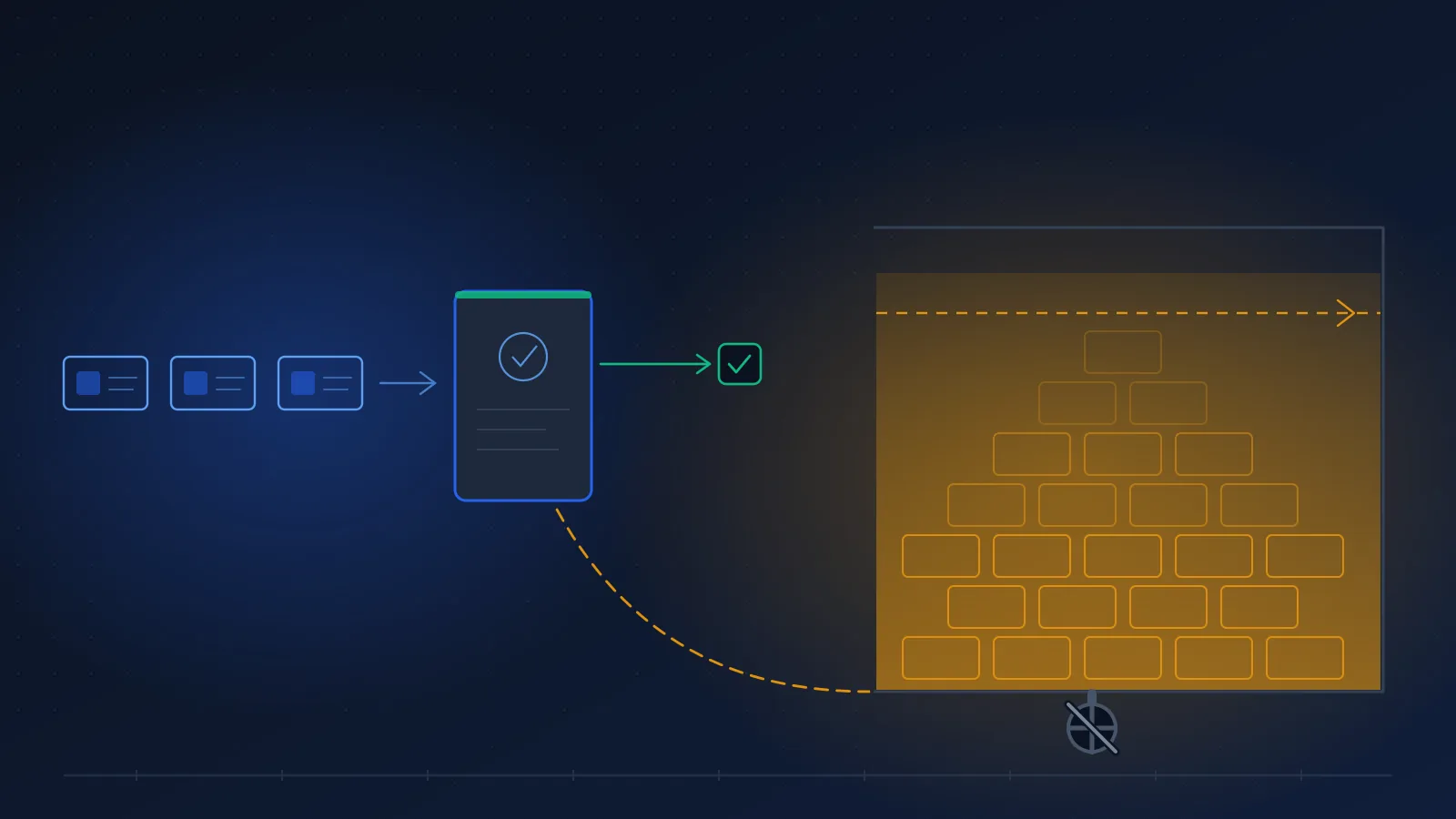
Editorial illustration on a deep slate-navy background: a narrow stream of abstract document cards enters a processing gate on the left, and instead of draining away, the cards pile up into a large reservoir behind it. A small drain valve sits unopened at the base of the pile. Abstract, no faces, no readable text.
engineering ·

153 Million Licences, 21 Million Checks a Month. Your Breach Size Is a Retention Setting.

IDScan confirmed on 10 September 2026 that driver's licences were stolen from its cloud, after a dark web service surfaced on 31 August offering searchable scans of 153 million people in the US and Canada. The company runs about 21 million verifications a month. Do the division: the stolen pile is roughly seven months of output that was never deleted. Nobody detected it for a year: not the company, not its Fortune 500 customers, not an auditor. A journalist did, because criminals advertised it. Here is why vendor security questionnaires cannot find this class of failure, why breach size is arithmetic rather than luck, and the seven places in your own estate where ID images pile up that no DPA covers.

age-verification age-assurance identity-verification
Editorial illustration on a deep slate-navy background: a full wall of blue archive drawers with a rectangular block cut out of it, outlined in dashed amber, and three drawers drifting away into empty space. To the right, a second, mostly empty wall outlined in green. A thin green thread of small tokens runs unbroken along the bottom beneath both walls and the gap. Abstract, geometric, no people, no readable text.
industry ·

Your Verified Users Live in Someone Else's Database: The Age Assurance Vendor Exit Problem

Yoti's ID app leaves Spanish app stores today. No breach, no accuracy failure, just a regulator's reading of one GDPR article that made the product unshippable in one country. For every service that routed age checks through it, the hard part is not the legal argument. It is that the verified state of the user base sits in a vendor's database, and nobody wrote an exit clause. Here are the four ways an age assurance vendor disappears, what a migration actually costs when you have to re-verify half a million people, why the evidence duty stays with you after the contract ends, and the six clauses to sign before you need them.

age-verification age-assurance vendor-exit
Editorial illustration on a deep slate-navy background: a corridor with two doorways. The left doorway is narrow and sharply drawn, marked with a face-shaped outline. The right doorway is wide and softly drawn, marked with four empty digit boxes, and a second faint outline of a person steps through it. Abstract, no faces, no readable text.
compliance ·

Yoti Is Leaving Spain Rather Than Add a PIN. Article 9 Only Has Two Doors.

On 10 September 2026 the Yoti ID app disappears from Spanish app stores. Not because it was breached, and not because the face match was inaccurate. Spain's data protection regulator found that matching a live selfie against a stored template counts as uniquely identifying a person, which puts it inside GDPR Article 9. Yoti's legal basis for that was consent, and Article 7(4) says consent is not freely given when it is a condition of using the service. The fix a regulator will accept is a PIN, and a PIN can be lent to your younger brother. Here is what the AEPD actually decided across three separate findings, why Article 6 has an exit that Article 9 does not, and why the only durable answer is to stop creating biometric data you do not need.

age-verification age-assurance aepd
Editorial illustration on a deep slate-navy background: a rejected user token leaves an age gate along two possible routes. The upper route reaches a human review desk drawn as a wide, blurred, low-confidence band. The lower route reaches a second, narrower verification gate drawn sharp and precise. Abstract, no faces, no people, no readable text.
engineering ·

Off by Seven Years: The Age Appeal Path Nobody Measures

Ofcom looked at what services do when a user says the age check got it wrong and found two things: many have no appeal route at all, and only six could produce any data on appeals upheld. Ofcom's own codes now ask for that route. The trouble is what sits at the end of it. Human age estimation has a mean absolute error around 4.7 years, and 7.4 for adults, against models that now manage one to two, and the human side is the only side that has not improved since 2015. Here is why an age appeal must escalate to a stronger method rather than a stronger opinion, what the legal duty actually rests on once you read past Article 20 and Article 22, and why your appeal upheld rate is the only field measurement of your age gate you will ever get.

age-assurance age-verification appeals
Editorial illustration on a deep slate-navy background: a row of stored age decision tokens sits behind a verification gate, each token fading from bright to grey along a horizontal time axis. One token in the middle has quietly flipped from a restricted marker to an unrestricted one, but the gate still reads the old value. Abstract, no faces, no people, no readable text.
engineering ·

Your Age Check Has No Expiry Date. The EU's Has Three Months.

Age is the only attribute you verify that is guaranteed to become wrong, on a date you could have calculated at the moment you checked it. Yet almost every platform stores the result as a boolean with no expiry column, and the only cadence any regulator has actually mandated is an annual review of the service, not of the user. The EU age verification app already picked three months and no revocation. Here is what really expires in an age decision, why the four clocks are not the same clock, and how to set a re-verification cadence without rebuilding the birthdate you were told not to keep.

age-assurance age-verification re-verification
Editorial illustration on a deep slate-navy background: a verification gate flanked by a bright test harness that loops back on itself in a closed circuit, while the population the gate is meant to stop stands outside the harness entirely, drawn as faint unreachable tokens behind a dashed boundary. Abstract, no faces, no people, no readable text.
engineering ·

Your Age Gate Has Never Been Tested on a Child

Regulators grade age assurance on effectiveness, and effectiveness is an empirical claim. But the population your gate exists to exclude is the one population you cannot lawfully recruit into a test set — and Ofcom itself declined to set a numerical accuracy threshold because the testing methodology is not yet mature. Your sandbox returns whatever answer you asked it for. Here is the part of an age gate you can actually test, the part you must buy as evidence, and how to ship a control you can never fully verify.

age-assurance age-verification testing
Editorial illustration on a deep slate-navy background: a wide population of small account tokens flows through a scanning band that sorts them into three lanes — cleared, held in a translucent quarantine holding pen, and destroyed. One token in the destroyed lane glows amber and has a broken return arrow curving back toward the population, the arrow visibly severed. Abstract, no faces, no people, no brand marks, no readable text.
engineering ·

Your Age Sweep Has No Undo Button

Every age assurance programme is designed around the front door. The duties that actually landed in 2026 are about the people already inside: detect them, deactivate them, delete them, and stop them coming back. That is not a bigger age gate — it is a destructive batch job whose selection criterion is a model with a known error rate, run once, across your whole user base. Deletion has no undo, and the DSA and GDPR simultaneously require a real way back for everyone the model got wrong. Here is how to build a back-book remediation pipeline that survives both.

age-assurance age-verification back-book
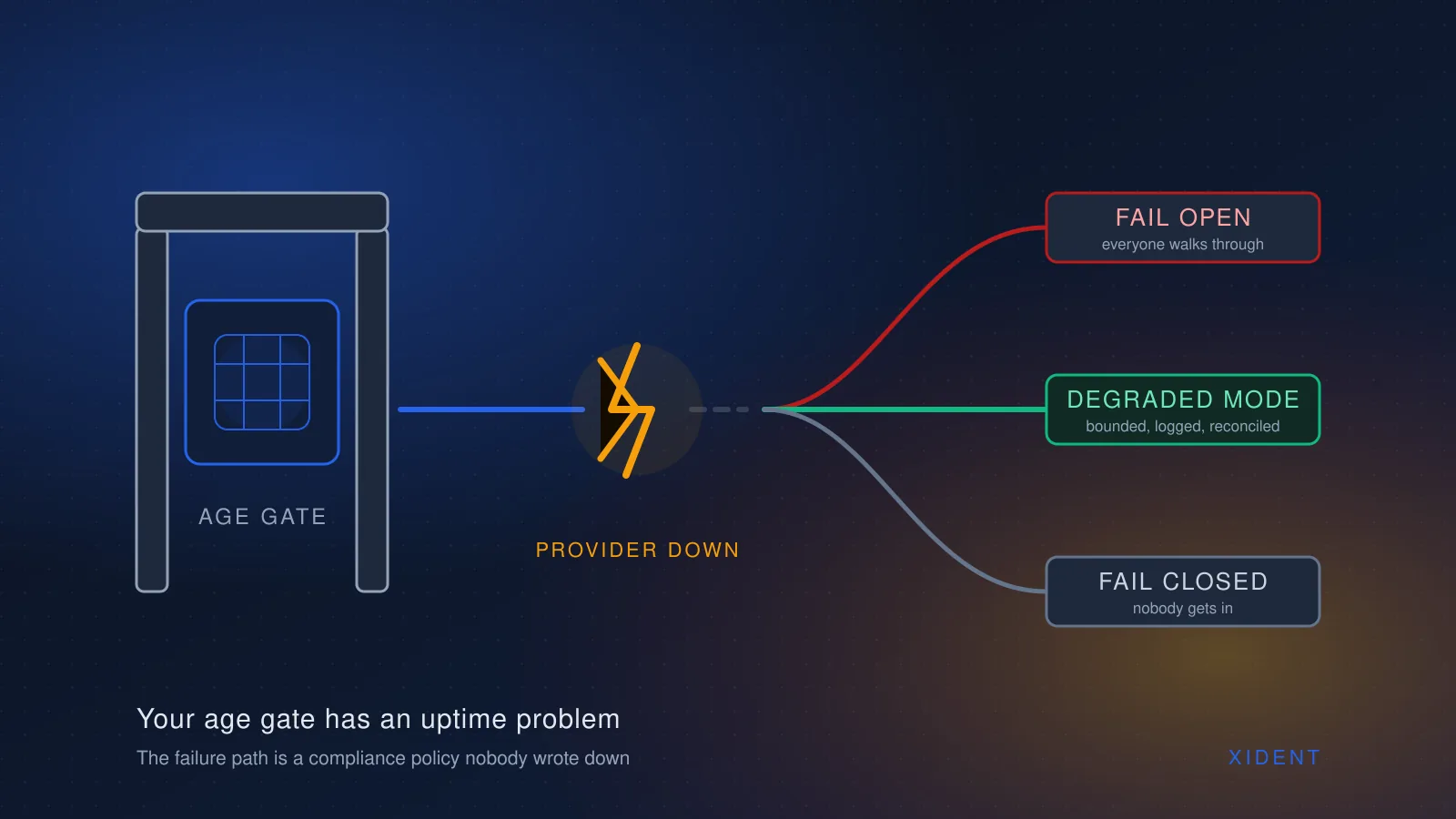
Illustration of an age verification gate with its provider link broken, showing two divergent paths — one waving users through, one blocking everyone — and a third designed degraded path between them
engineering ·

Fail Open or Fail Closed: What Your Age Gate Does When the Verification Provider Is Down

Every age assurance programme has a documented method and an undocumented failure mode. When the verification provider returns 503, someone's code either waves the user through or blocks everyone, and that line was written by an engineer who was not making a compliance decision. Ofcom's record duties cover the measure you have in use — including the one that runs during an outage. This is how to design a degraded mode you can defend.

age-assurance age-verification reliability
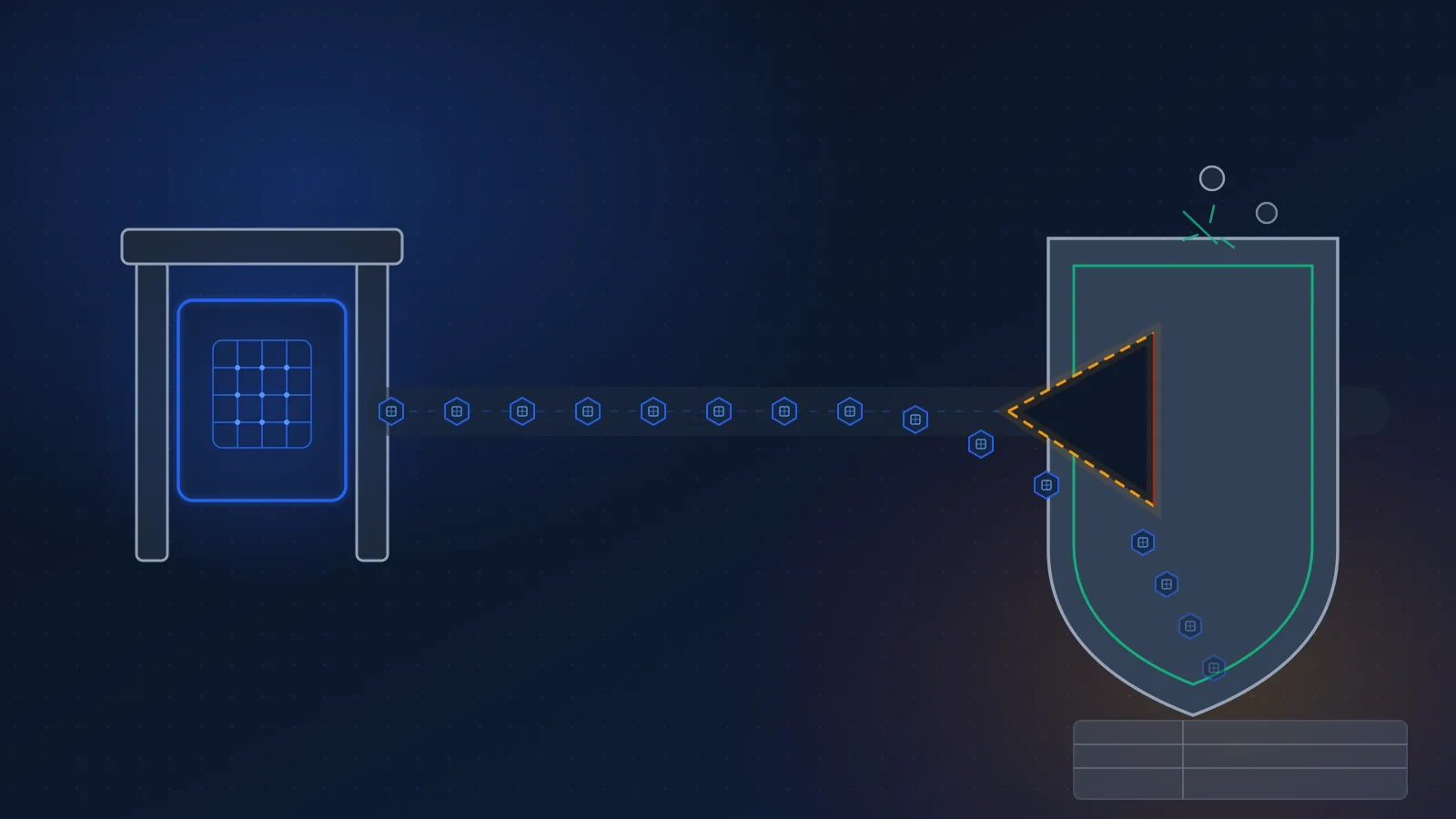
Editorial illustration: a verification gate feeds a stream of face-scan tokens toward an insurance policy shield, but a wedge-shaped exclusion has been cut out of the shield and the tokens pass straight through the gap onto the balance sheet below. Abstract, no faces, no text.
compliance ·

Your Age Assurance Program Is Probably Uninsured

Age verification law tells you to check every user. Your cyber policy has spent three years carving out exactly the data class those checks produce. Insurers have won a run of BIPA coverage denials, express biometric exclusions are now standard form language, and almost nobody has mapped their age assurance flow against their own policy wording. Here is the coverage gap, the case law that created it, and the architecture that keeps age assurance claims inside the policy instead of on your balance sheet.

age-verification age-assurance bipa
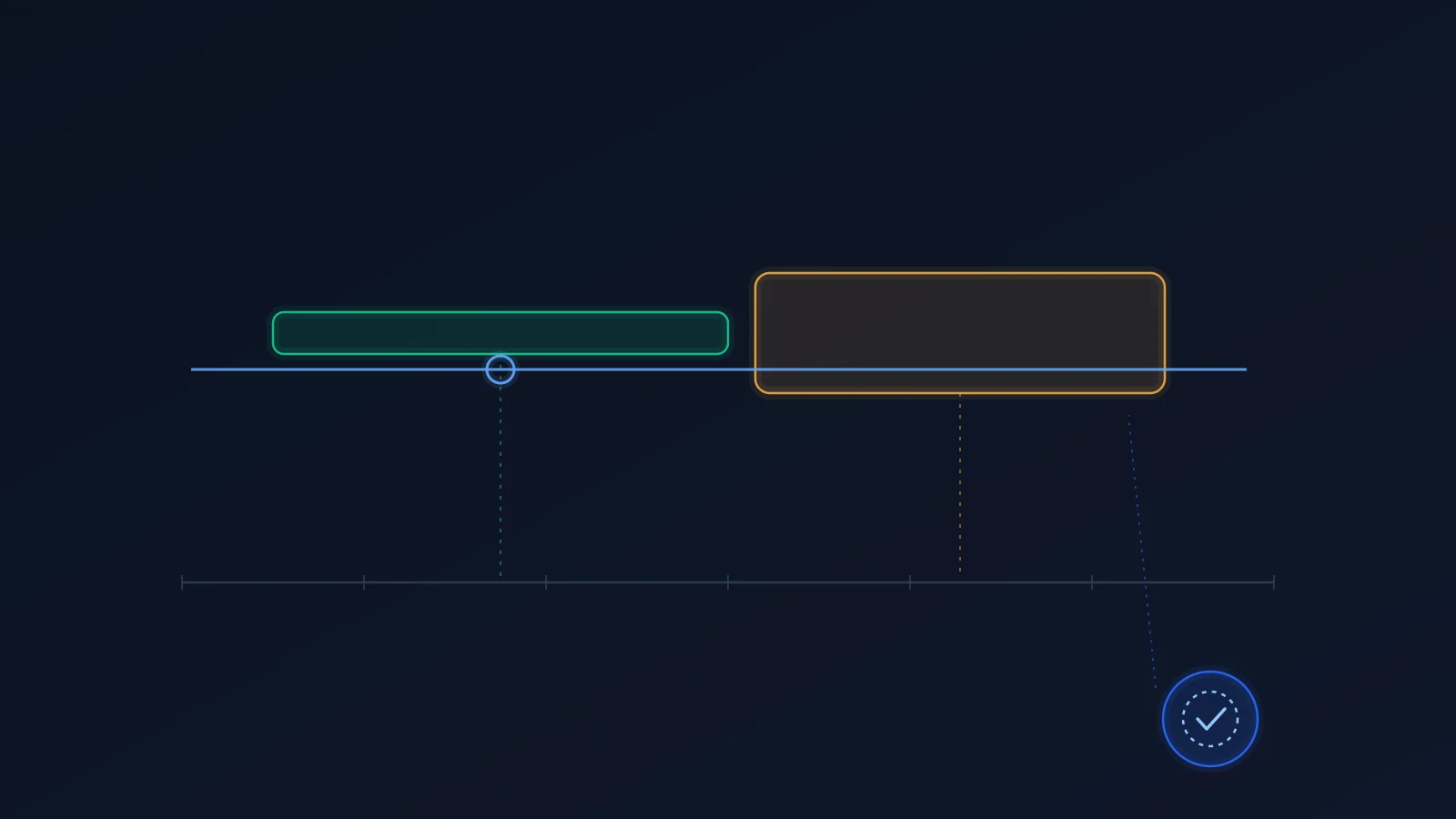
Editorial illustration on a deep slate-navy background: a horizontal age axis runs left to right with two error-tolerance bands stacked above it, a narrow emerald band over the younger segment and a wider amber band over the segment nearest the adult threshold. A single global cut line crosses both bands and clearly fails the narrow one. An audit seal glyph sits to the side, connected by a thin line to the bands. Abstract, no faces, no children, no brand marks, no readable text.
compliance ·

Age Assurance Finally Has a Number, and a Court Didn't Set It

Meta's proposed settlement with state attorneys general puts hard false-positive ceilings on age assurance: 3% for 13-15 year olds and 10% for 16-17 year olds on commercially available methods, certified annually by an independent third-party tester and reviewed by an auditor with raw-data access for ten years. It is the first national accuracy floor for age checks in the US, and it was written into a private contract rather than a statute. Here is what the numbers actually demand, why the glide path quietly penalises buying over building, why they conflict with New York's per-year table, and why both schemes only constrain half the confusion matrix.

meta-settlement age-assurance age-verification
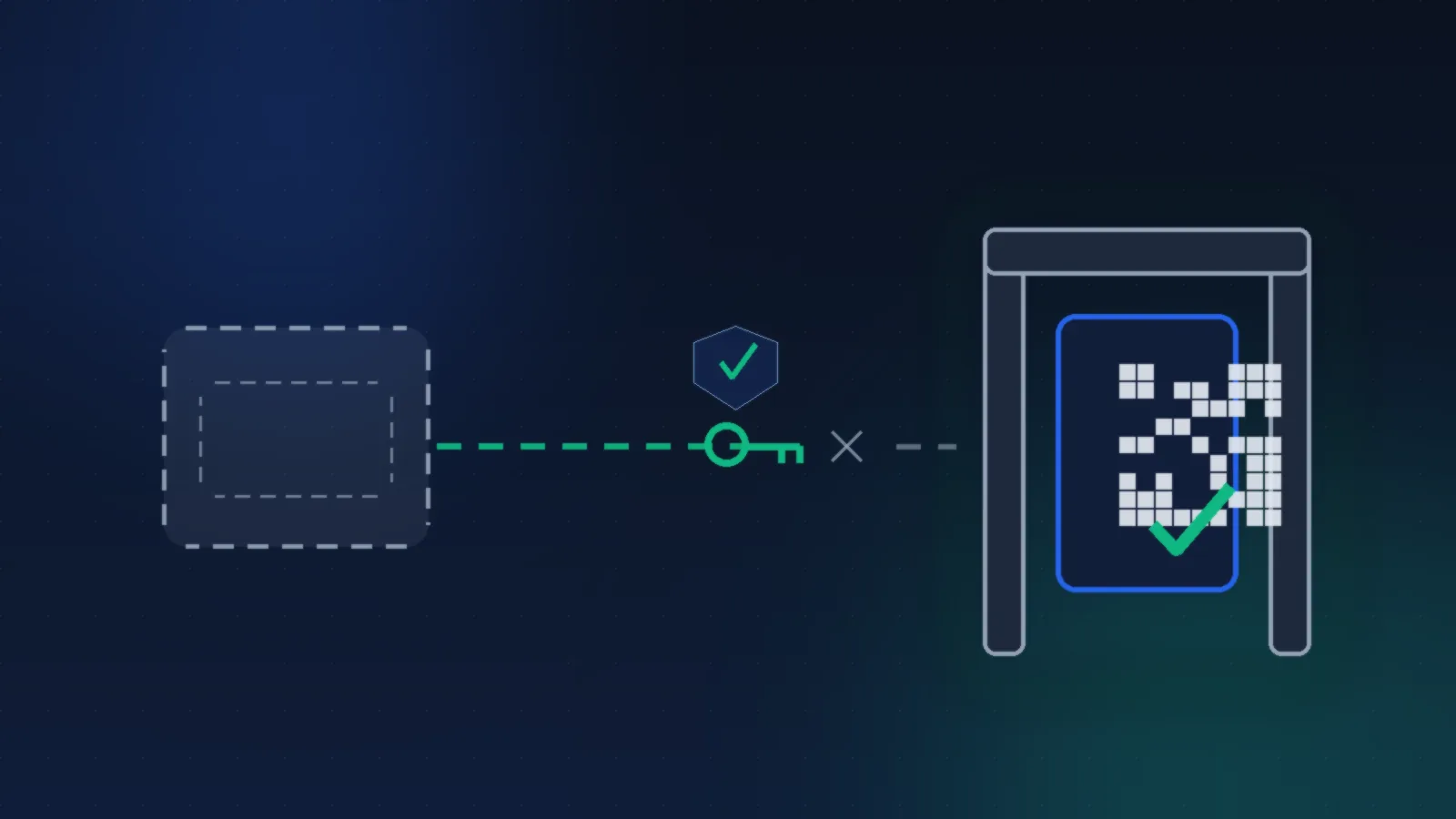
Editorial illustration on a deep slate-navy background: on the right, a verification gate showing a QR panel with a bright emerald check mark, glowing to signal it is live. On the left, a translucent dashed 'wallet' card emits a single small key token toward the gate, but the connecting line is broken with a visible gap, signalling a beta that is not fully wired in. A faint anonymity shield sits over the passing token so no identity travels with it. No faces, no real people, no flags, no brand marks, no readable text.
compliance ·

Spain Designed the Most Privacy-Forward Age Check in Europe. The App Is Beta and the Law Is Stalled.

Spain's data protection regulator wrote the smartest rulebook for age verification in Europe: the AEPD decalogue proves someone is an authorized adult without ever revealing who they are, and the Cartera Digital Beta wallet issues single-use keys so a site learns 'over 18' and nothing else. The design is world-leading. The delivery isn't finished. The wallet is still literally named Beta, the flagship Organic Law for the Protection of Minors in Digital Environments is stalled in parliament, and neither reaches a tourist, an EU visitor, or a returning user on a new device. Here is what actually binds a platform operating in Spain today, and why wiring your age gate to a government beta is a plan with a coverage hole the size of everyone who isn't a resident with the app installed.

age-verification age-assurance spain
Editorial illustration on a deep slate-navy background: a cluster of abstract platform nodes gathered over a stylised map outline of Ireland on the left, each node linked by a single emerald channel to a central verification gate. To the right, a translucent, dashed 'wallet' card floats disconnected from the gate, its connecting line drawn broken to show it is not yet wired in. No faces, no real people, no brand marks, no readable text.
compliance ·

Ireland Is Big Tech's Home Regulator. Its Age-Assurance Rules Are Live — the Wallet Isn't.

Ireland hosts the EU headquarters of most large platforms, which under the audiovisual country-of-origin principle makes Coimisiún na Meán their home regulator and its Online Safety Code the binding age-assurance rule since July 2025. Dublin has chosen not to follow France or the UK on strict site-level checks, betting instead on a government wallet and its EU Council Presidency to carry a pan-European 'digital age of majority.' But the wallet is still a beta with no platform signed up, and the Code's 'effective age assurance' obligation is enforceable now. Here is why platforms established in Ireland cannot wait for the wallet, and what the home regulator already requires.

age-verification age-assurance ireland
Editorial illustration on a deep slate-navy background: a user node on the left and a website node on the right, separated by a vertical verification gate in the centre. Two curved channels pass through the gate but never touch — an emerald 'age' channel carrying a single over-18 token to the site, and a blue 'identity' channel that terminates at the gate and never reaches the site. A faint dotted line showing where a leak would cross the two channels is drawn broken. Abstract, no faces, no real people, no brand marks, no readable text.
engineering ·

Double Anonymity or Compliance Theater: The Two Things a Private Age Check Must Never Learn

Double anonymity is now the privacy standard age-verification regulation is converging on — France's ARCOM referential mandates it, the EU's Age Verification Blueprint is architected around it. A June 2026 empirical study of European systems on adult sites found most deployments fail it anyway. The gap between the standard on paper and the systems in production is where the real risk lives. Here is what double anonymity actually means, the two separations everyone claims and the one almost everyone quietly breaks, and why unlinkability is a property you can test rather than a promise you can print.

age-verification age-assurance double-anonymity
Editorial illustration on a deep slate-navy background: a closed geo-fence gate blocking a region, with a dated penalty stamp already pressed onto the ground behind it inside the gate. A light emerald audit-trail line runs backward in time past the gate; a blue clock marks the non-compliance window that closed before the exit. Abstract, no faces, no real people, no brand marks, no readable text.
compliance ·

The Geoblock Came Too Late: Fapello's £630,000 Fine and the Liability You Can't Exit Your Way Out Of

Ofcom fined the operator of fapello.com £630,000 in July 2026, after the site had already geoblocked the United Kingdom. Exiting a market is a forward-looking move applied to a backward-looking problem: a fine prices the window you were live and non-compliant, and leaving on day N does nothing about days one through N. Here is what the Fapello decision actually establishes, why the extra £30,000 for ignoring an information request is the part operators keep underestimating, and why the only version of 'cheaper than the fine' was verifying before the window ever opened.

age-verification age-assurance online-safety-act
Editorial illustration on a deep slate-navy background: a vertical age ladder or brackets column climbs from a small child figure at the base through rungs labelled as bands, but the ladder is cut off flat at a high rung marked with an open-ended arrow, leaving a dark empty gap above where two higher rungs should be. Beside the gap, a separate heavier blue gate with an emerald document-and-check token stands on its own, disconnected from the ladder, illustrating that the highest age thresholds sit above where the signal stops. Abstract, no faces, no children's features, no brand marks, no readable text.
compliance ·

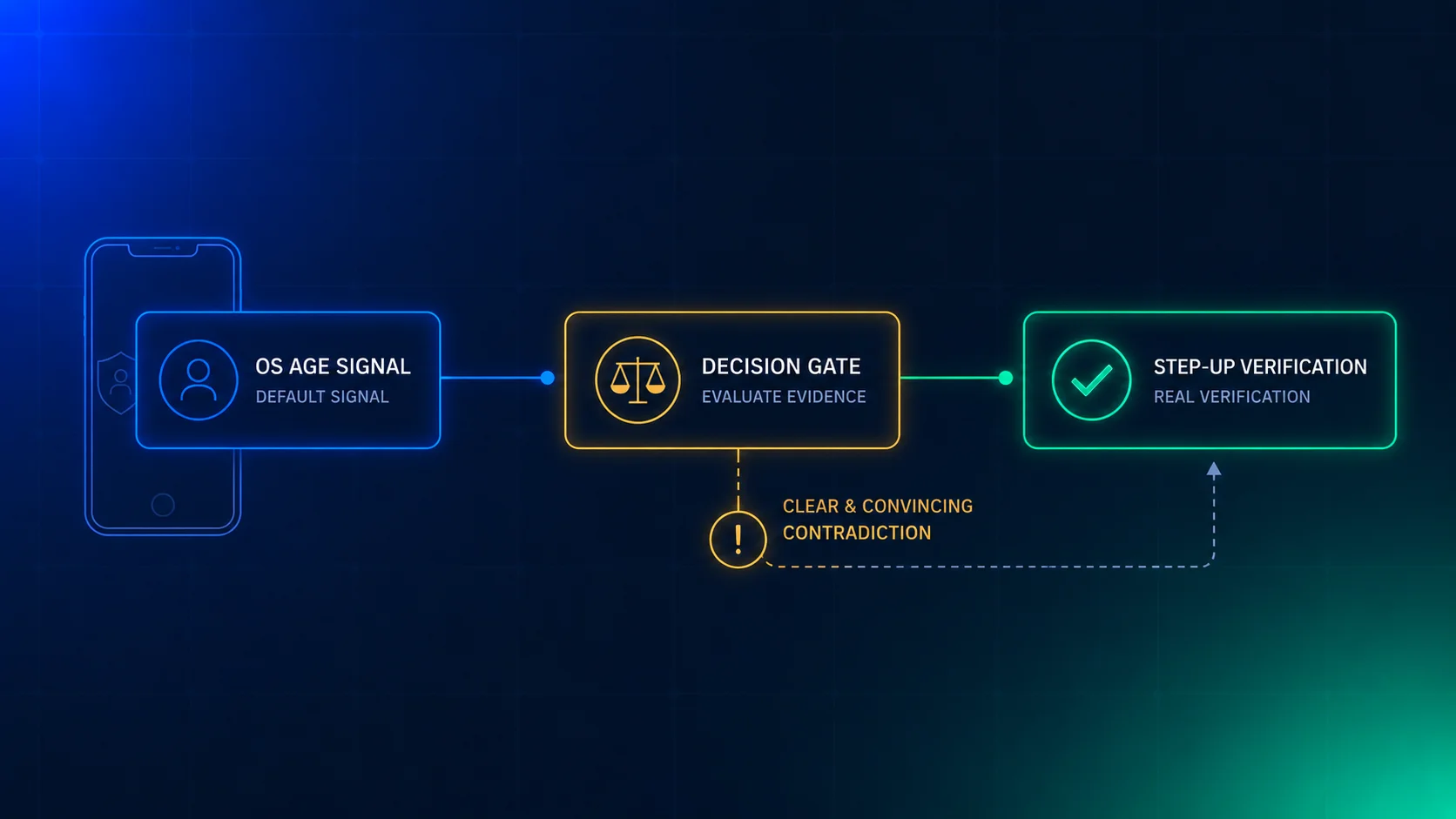
The Federal Age Signal Stops at Seventeen: What the Digital Age Assurance Act Can Gate, and What It Can't

In July 2026 four senators introduced the Digital Age Assurance Act, a federal bill that would make operating systems the primary source of a user's age and broadcast it to apps and covered websites through a secure API. The privacy design is genuinely better than an ID upload: no government ID, no face scan, just a real-time signal. But read the taxonomy. The API returns one of four brackets: under 13, 13 to 15, 16, and 17 or older. There is no 18 bracket and no 21 bracket. That single design choice decides what the signal can and cannot do. It can route children out of places they don't belong. It can never tell you a user is old enough to buy alcohol, place a bet, or open an adult account. Here is why the federal signal is a Check, not a Verification, and how to build so it doesn't matter which age bill becomes law.

age-verification age-assurance digital-age-assurance-act
Editorial illustration on a deep slate-navy background: a stylized ad-serving pipeline splits at a gate into two paths — a bright emerald 'personalized' lane carrying a data token, and a muted grey 'contextual' lane with the token stripped out. An age-band dial beside the gate reads adult, minor, and an unresolved middle band that routes to the contextual lane by default. Abstract, no faces, no children, no brand marks, no readable text.
industry ·

Contextual by Default: How the 2026 Targeting Rules Turn Age Assurance Into an Ad-Revenue Switch

Age assurance has been sold as a content gate. In 2026 it became a monetization control for every ad-supported business. The FTC's amended COPPA Rule is in full force, the Senate has passed COPPA 2.0, and the DSA bans profiling-based ads to minors — and the common thread is that if you cannot establish a user is an adult, the compliant default is contextual, non-personalized advertising with no third-party data disclosure. That makes your age signal a line item in your ad P&L. Here is why the 'we didn't know they were a minor' safe harbor is closing, and how to gate ad treatment with a lightweight age Check rather than a document checkpoint.

age-verification age-assurance targeted-advertising
Editorial illustration on a deep slate-navy background: a horizontal threshold line with a service icon crossing from an unregulated zone into a heavier gated tier, where a bound identity token attaches. A light emerald ring marks the age gate; a blue token marks the identity duty that switches on only past the line. Abstract, no faces, no real people, no brand marks, no readable text.
compliance ·

Scope Before Verification: What Wikipedia's Category 1 Fight Says About Who Actually Owes Identity Duties

Most teams treat age and identity verification as a vendor question: which provider, which flow. Wikipedia spent a year and a High Court case fighting the question that comes first, whether the law categorizes your service into a tier that makes verifying your users mandatory at all. The UK Online Safety Act's Category 1 designation switches on a user identity verification duty that has nothing to do with the content you host and everything to do with your size and your features. Here is what that threshold triggers, why an encyclopedia litigated it rather than the technology, and why the fix is not to dodge scope but to verify in a way that does not become the next breach.

age-verification identity-verification online-safety-act
Editorial illustration on a deep slate-navy background: a stylized text-to-image prompt box feeds into a generative pipeline, split into two gated paths. A light emerald gate at the entrance carries an age ring; a heavier path deeper in carries a bound identity token linked by a thin chain to the output frame. Abstract, no faces, no explicit content, no real people, no brand marks.
industry ·

Age Was the Easy Question: Identity Accountability for Generative-AI Platforms After the 2026 Nudify Crackdown

The 2026 crackdown on AI 'nudify' apps changed what age verification has to accomplish on a generative platform. Keeping minors out is now the easy half. The hard half is knowing who is accountable for what an account produces, because the new laws protect third parties from your users, not just your users from your content. Here is why an age gate does not answer that, how to separate the age Check from the identity Verification, and where each one belongs in a text-to-image or video stack.

age-verification identity-verification generative-ai
Editorial illustration on a deep slate-navy background: a player's entry path into a stylized casino floor passes through two gates — a light, fast gate at the entrance marked with an emerald age ring, and a heavier document-and-shield gate placed further in where a stack of tokens turns into a redeemable coin. Between the two gates a shaded 'delay window' is shown where unchecked value quietly accumulates. Abstract, no faces, no brand marks, no real currency.
compliance ·

Verify at the Door, Not at the Cash-Out: Age and Identity Verification for Sweepstakes and Social Casinos in 2026

Sweepstakes casinos were built to defer the hard questions to redemption. In 2026 a dozen states made that deferral untenable, and California's AB 831 pushed liability onto the vendors too. Here's why the payout-trigger KYC model is a timing failure, how to separate the three questions operators keep collapsing into one, and how to gate age at signup and reserve full identity for the point where value actually moves.

age-verification identity-verification sweepstakes-casino
Editorial illustration on a deep slate-navy background: two parcel paths leave an online storefront, one routed through a licensed-dealer checkpoint and one shipping directly to a home, with a verification gate placed on the direct path where no checkpoint exists. Abstract, no faces, no weapons, no logos.
compliance ·

Where the FFL Stops: Age and Identity Verification for Online Firearms, Ammunition, and Parts Sellers in 2026

Complete firearms ship to an FFL that runs the age check in person. Ammunition, parts, and accessories often ship straight to the buyer with no backstop, and in 2026 California moved that verification duty onto the seller at checkout. Here's the federal age floor, what AB 1263 and California's ammunition rules actually require, why a checkbox fails, and how to build an age-and-identity check that survives a state patchwork.

age-verification identity-verification firearms
Editorial illustration on a deep slate-navy background: a small visible age-check gate icon sits on a thin horizontal surface line, and directly beneath it a translucent iceberg of blue and slate blocks descends into the dark, each block labeled by a faint glyph for accuracy, liveness, a rules engine, retention, and uptime. A soft emerald checkmark token floats to one side. No faces, no logos, no text baked in: a premium enterprise editorial diagram about the hidden depth below a simple gate.
guides ·

Build vs. Buy Age Verification: The Real Cost of the In-House Age Gate in 2026

Building age verification in-house used to mean a date-of-birth field and a checkbox. In 2026 it means an orchestrated estimation-and-document stack, NIST-grade accuracy you can defend, injection-attack defense, a rules engine that tracks 25-plus US state laws plus the UK and EU, and retention discipline strict enough to survive a breach. This is an honest build-vs-buy breakdown: the hidden total cost of ownership, when building actually makes sense, and how the Check-versus-Verification cost model changes the math.

build-vs-buy in-house-age-verification age-verification
Editorial illustration on a deep slate-navy background: a stylized map of the European Union rendered as interlocking nation-shaped tiles. A single translucent blue shield that once covered the whole map is shown cracked down the middle, its two halves sliding apart. Through the crack, a bright emerald age-assurance credential token with a checkmark passes from one tile to another, unobstructed. Thin amber lines trace 'notice' arrows between three member-state tiles. No faces, no flags, no logos — an abstract single-market-and-sovereignty diagram elevated to premium enterprise editorial art.
compliance ·

Country of Origin Is No Longer a Shield: What the CJEU's June 2026 Age-Verification Ruling Changes for Every Platform Serving the EU

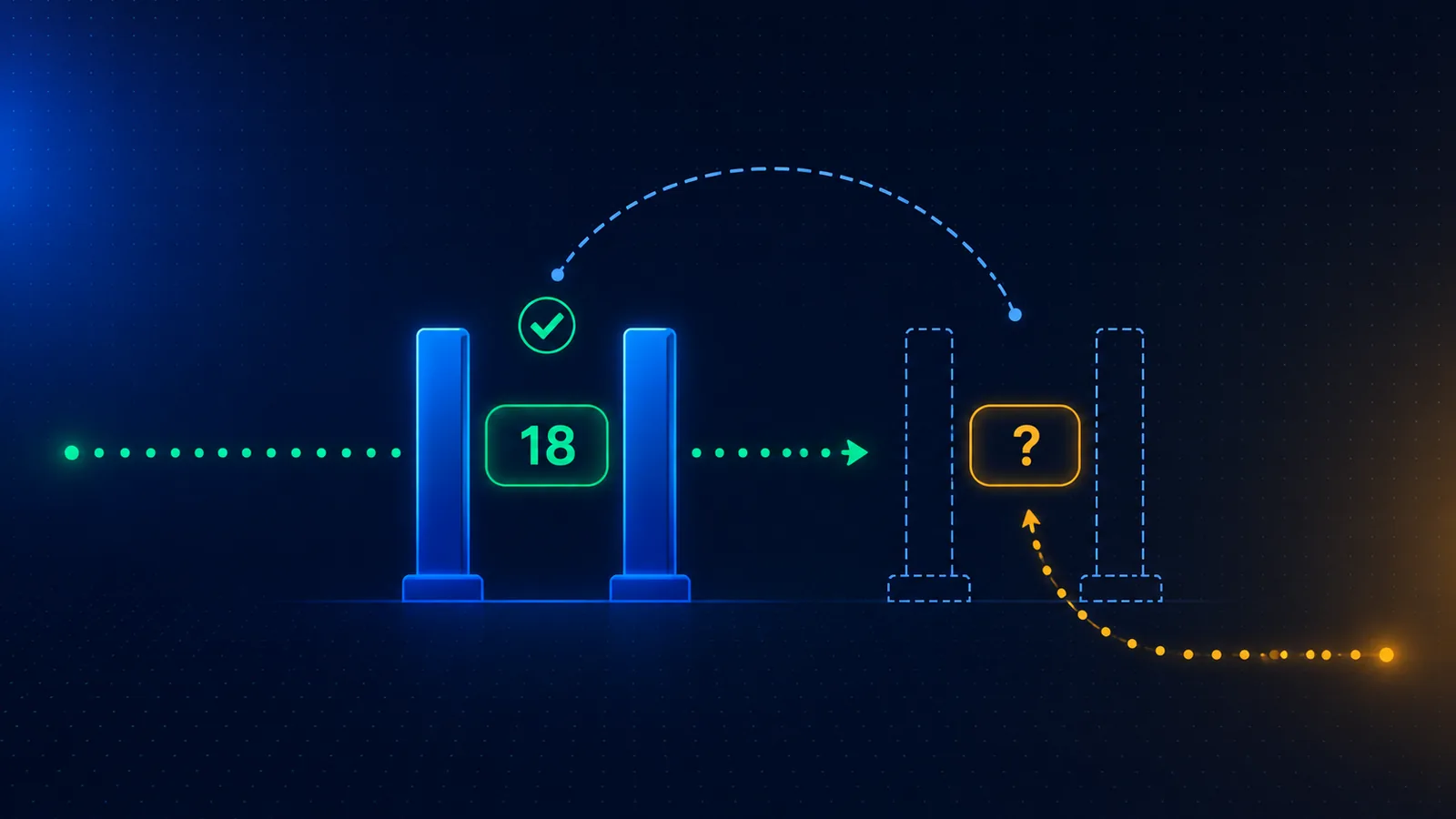
For twenty-five years, the country-of-origin principle was the load-bearing wall of the EU single market for online services: you complied with the rules of the member state where you were established, and everyone else's rules were someone else's problem. On 16 June 2026, the CJEU Grand Chamber cracked that wall for one specific purpose. In Joined Cases C-188/24 (WebGroup Czech Republic) and C-190/24 (Coyote System), the Court held that the protection of minors can justify one member state imposing age-verification duties on a service established in another — the exact question France's Arcom notices had put in play. The same judgment also ruled that algorithmic control over content distribution can strip a platform of its hosting-liability immunity. Here is what the ruling actually says, why 'establish in the most permissive member state' is no longer a compliance strategy, and the age-assurance architecture that clears the strictest bar in the bloc instead of the most convenient one.
cjeu country-of-origin age-verification
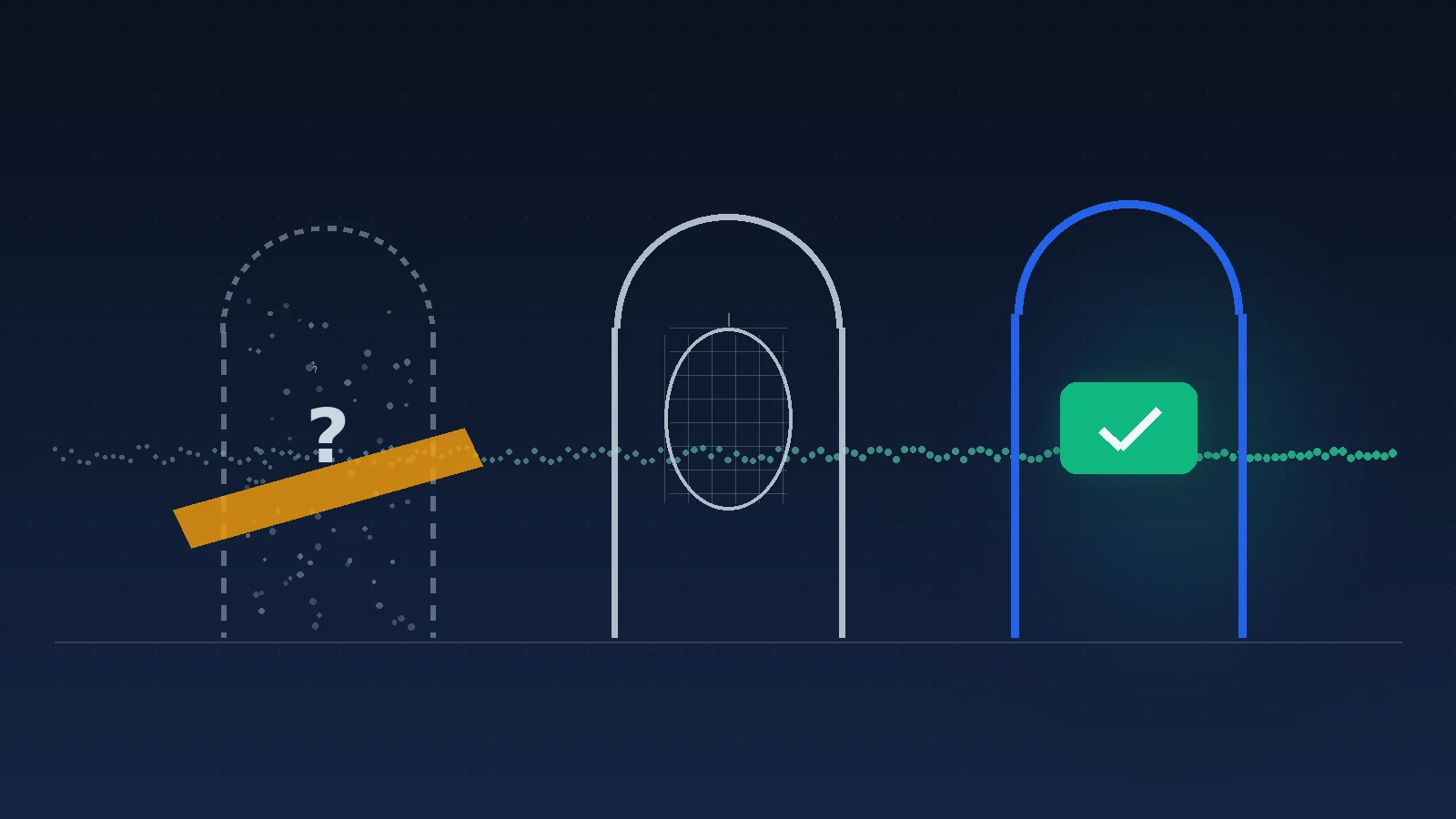
Editorial illustration on a deep slate-navy background: three vertical gates in a row. The leftmost gate is translucent and dashed, labelled with a faint question mark, made only of loose behavioral signal dots drifting through it. The middle gate is a solid cool-grey arch with a small measurement grid across a stylized face outline. The rightmost gate is a bright blue arch holding a small emerald credential token with a checkmark. A thin amber 'under investigation' tape crosses the dashed leftmost gate. No faces in detail, no logos — an abstract assurance-tiers diagram elevated to premium enterprise editorial art.
compliance ·

Inference on Trial: Ofcom's TikTok Investigation and Why 'Guessing' a User's Age Can't Be Your Gate of Record

For years, 'age inference is not age verification' was a design argument you could win or lose in a slide deck. On July 16, 2026, Ofcom turned it into an enforcement case. The regulator opened a formal Section 12 investigation into TikTok's age-inference system — the practice of estimating a user's age from behavioral signals like watch history rather than a measured check — and published a statutory Age Assurance Report on the same day stating that inference is 'not included in our industry guidance as a method that is capable of being highly effective.' The penalty exposure is up to £18M or 10% of qualifying worldwide revenue; the first update lands in October. Here is the difference between inference, estimation, and verification that most teams still blur, why the distinction just acquired a price tag, and the architecture that keeps behavioral signals where they belong — as a router, never as the gate of record.

age-inference tiktok ofcom
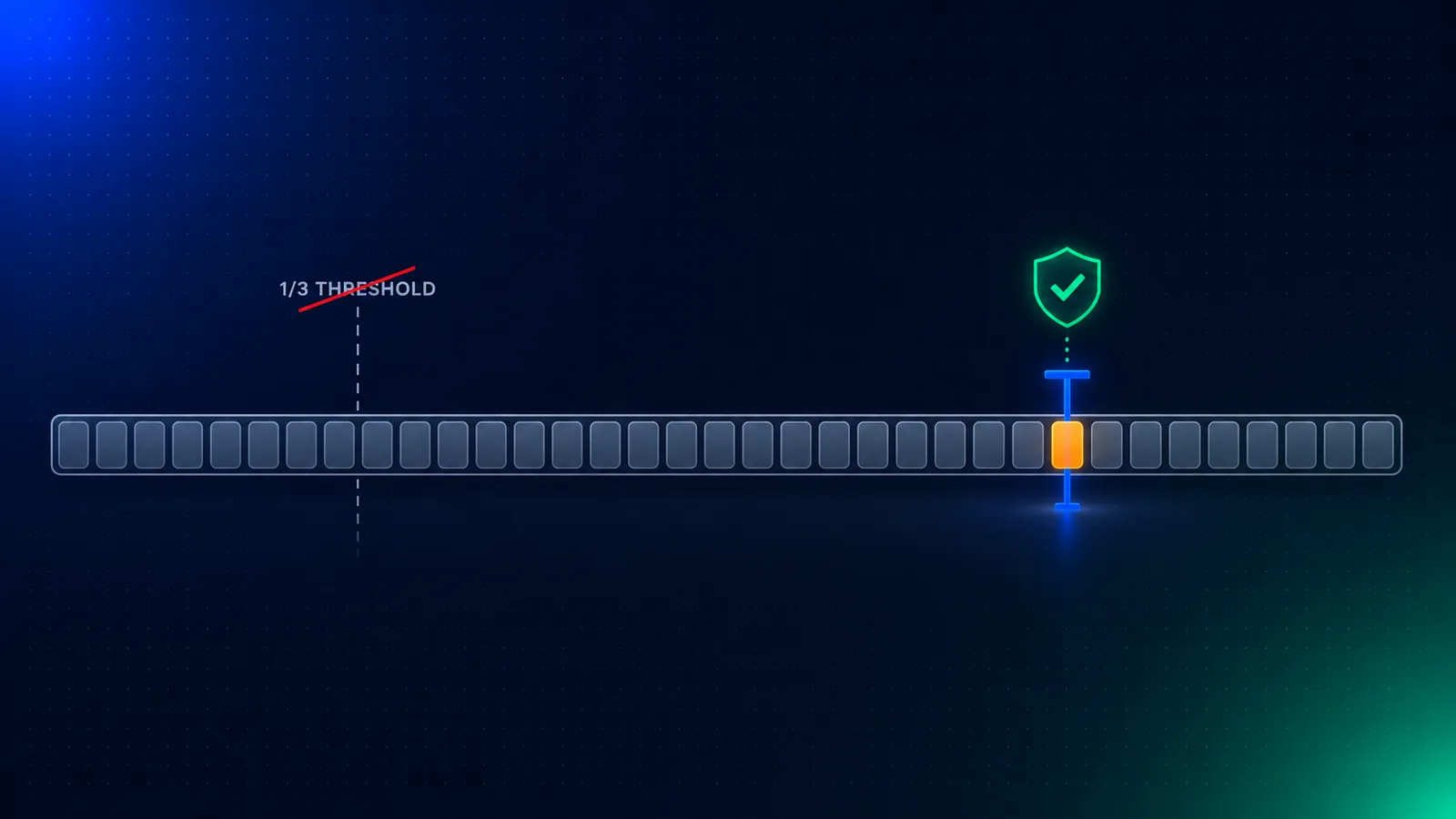
Editorial illustration on a deep slate-navy background: a long horizontal bar representing a platform's content, almost entirely cool grey with a single small amber cell near the right end. A bright blue vertical gate marker sits directly on that one amber cell rather than at any one-third boundary, and the old dashed 'one-third' line is shown faded and crossed out further left. Above, a small emerald shield-shaped credential token with a checkmark hovers over the single amber cell. No faces, no explicit imagery, no logos — a statistics-style diagram elevated to premium enterprise editorial art.
compliance ·

One Item Is Enough: The SCREEN Act Removes the Content Threshold — and Redraws Which Platforms Have to Verify Age

For three years, the ratio was the escape hatch. Texas set the line at one-third of content 'harmful to minors,' the Supreme Court upheld the test in Free Speech Coalition v. Paxton, and general-audience platforms scoped themselves out by measuring their own content mix. The federal SCREEN Act deletes that threshold. There is no 'significant portion' requirement in the bill — a single qualifying item can pull a streaming service, a forum, a social feed, or a UGC product into a federal age-verification mandate, enforced by the FTC, with self-attestation banned and VPN traffic explicitly in the net. On August 5, 2026 it cleared a Senate Commerce vote and then stalled on quorum. Here is what the no-threshold trigger changes about scoping, why walling your entire front door is the wrong answer, and the scoped, two-tier architecture that survives it.

screen-act age-verification federal-legislation
Editorial illustration on a deep slate-navy background: two age gates side by side — a finished, glowing child gate on the left and a second gate on the right still under construction with an unresolved 'parent?' marker, joined by a dashed linkage line — an abstract diagram of the parent-side verification gap, no faces, no children, no logos.
compliance ·

Who Checks the Parent? New York's Final SAFE for Kids Rules Make the Consenting Adult the Hard Part of Age Assurance

On July 28, 2026, New York finalized the SAFE for Kids Act rules — and the buried requirement isn't the child gate everyone spent a year building. It's the parent. The rules now regulate the consenting adult's identity as tightly as the minor's: prove they're an adult, prove they're actually this child's parent, and account for fraud. Here's why 'click here, I'm the parent' is now non-compliant by design, and the dual-assurance architecture that survives the January 2027 deadline.

safe-for-kids-act verifiable-parental-consent vpc
Editorial illustration on a deep slate-navy background: a stream of user dots approaches an age-check gate; most flow straight through a wide low-friction lane, while a thin band peels off sideways through a dashed 'VPN' detour that loops around the gate — an abstract diagram of circumvention routing, no faces, no logos, elevated to editorial art.
industry ·

Age Verification and the VPN Surge: Why Circumvention Isn't the Compliance Failure Everyone Says It Is

A year after the UK switched on age checks, VPN downloads spiked, Reddit filled with bypass guides, and the headline wrote itself: age verification failed. It didn't — but the headline hides a real problem. This is how to read the 2026 circumvention data like an operator: what the 'highly effective' and 'reasonable steps' standards actually demand, why heavy ID-upload checks manufacture the very adult VPN demand that makes the numbers look damning, and what to build before Ofcom's October 2026 VPN guidance lands.

age-verification vpn circumvention
Editorial illustration on a deep slate-navy background: a low-friction estimation gate on the left feeds a small stream of uncertain cases into a higher-assurance document verification gate on the right, with a wide green fast-path and a narrow amber step-up path — an abstract funnel diagram, no faces, no logos, elevated to editorial art.
industry ·

Estimation-First Goes Planetary: What YouTube's AI Age-Estimation Rollout Means for Your Age-Assurance Stack

On August 13, YouTube started estimating the age of every US user with AI — no upload, no ID, just behavioral signals. It is the moment estimation-first age assurance became the default for a billion-user platform. Here's what the rollout gets right, the appeal path almost everyone underbuilds, and how to architect an estimation-to-verification handoff that survives false positives without hoarding a data breach.

age-estimation youtube-age-verification estimation-first
Editorial illustration on a deep slate-navy background: an abstract horizontal bar representing a platform's content mix, one-third of it filled with a dense amber hatch and the remaining two-thirds in cool grey, with a bright blue vertical marker line sitting exactly at the one-third boundary. Above the bar, a small emerald shield-shaped credential token with a checkmark hovers at the threshold like a gate. No faces, no explicit imagery, no logos — a statistics-style diagram elevated to premium enterprise editorial art.
compliance ·

The One-Third Rule Comes for General-Audience Platforms: When an Adult-Site Age Law Becomes Your Problem

The threshold that decides whether a US age-verification law applies to you is not a category you opted into — it is a ratio measured against your own content. Texas set it at one-third of material 'harmful to minors,' the Supreme Court upheld it in Free Speech Coalition v. Paxton, and on July 9, 2026 Missouri signed the same test into hard law with language that can reach social platforms once enough of what they host trips the line. If you run a forum, a marketplace, a social feed, or a UGC or AI product and you assumed these statutes were a porn-industry problem, the one-third rule is telling you to re-read your own content mix. Here is why the ratio, not the label, now decides your compliance surface — and the architecture that answers it without nuking your funnel or becoming a honeypot.

age-verification one-third-rule harmful-to-minors
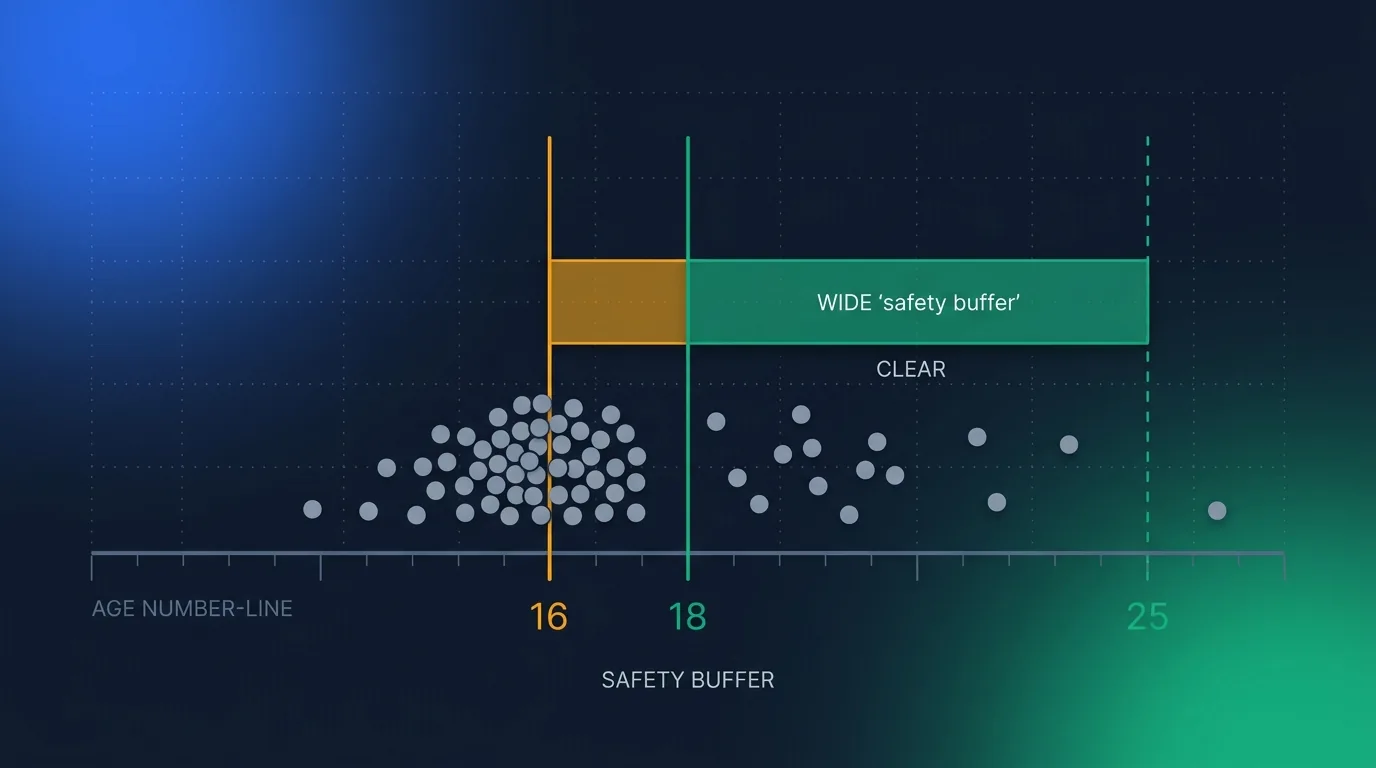
Editorial illustration on a deep slate-navy background: two vertical threshold lines labelled 18 and 16 on an age number-line. Around the 18 line sits a wide emerald safety band stretching up to 25, comfortably clear of the population below it; around the 16 line the same-width band collapses into a dense cluster of near-identical teenage markers that overlap the line itself, tinted amber to signal ambiguity. No faces, no children, no logos — an abstract statistics diagram elevated to editorial art.
compliance ·

The Buffer Disappears at 16: Why Under-16 Bans Break the Age-Estimation Playbook

Ofcom's July 2026 age assurance report reads like a victory lap for facial age estimation at the 18 line — 69 million checks, adult sites gated, effective-check rates nearly doubled. Then it concedes the sentence that resets every social-media roadmap: current age-inference systems can't support a meaningful under-16 ban at the point of entry. The reason isn't that estimation is worse on teenagers. It's that the 16 line takes away the safety buffer that made the 18 line economical. Here's the architecture that survives the harder threshold.

age-estimation under-16-ban social-media
Editorial illustration of an algorithmic social feed rendered as a toggle switch set to OFF over a deep slate-navy background, with an age-assurance confidence dial beside it; adults clear the threshold and the feed switches on to emerald, while unresolved users default to a calm chronological safe experience — no faces, no children, no platform logos
compliance ·

The Algorithm Is Off by Default: How California's SB 976 Makes Age Assurance the Switch

California's SB 976 inverts the age check. From January 1, 2027, a social platform may not serve an 'addictive feed' to a user it hasn't reasonably determined is not a minor — which makes age assurance a switch on your entire California audience, not a gate on a slice of it. The Attorney General's proposed rules ban self-declaration, certain payment methods, and ID-only checks outright. Here's the architecture that survives them.

sb-976 addictive-feeds age-assurance
Editorial illustration of a conversational AI companion interface meeting an age gate: a chat bubble flow approaches a glowing threshold line marked 18, with minors routed into a protected tiered experience and adults continuing through, over a deep slate-navy background
compliance ·

Companion AI Is Now an Age-Gated Category: SB 243, the State-Law Wave, and the End of 'We Didn't Know They Were a Minor'

In eight months companion AI went from an unregulated feature to a defined, age-gated product category. California's SB 243 is live, roughly a dozen states have followed, the FTC has seven firms under inquiry, and Character.AI banned under-18 chat outright. Here's what the new laws actually demand — and why 'constructive knowledge' of a minor is harder to satisfy than a hard ID gate.

companion-ai ai-chatbots sb-243
An editorial illustration of India's DPDP children's-data framework: a user flow meeting an age threshold line drawn at 18, branching to a verifiable-parental-consent path where a government-issued virtual identity token resolves to a single privacy-preserving verified-age signal, on a deep slate background with blue and emerald accents
compliance ·

India's DPDP Rules Draw the Line at 18: Age Verification and Verifiable Parental Consent Before May 2027

India didn't copy COPPA's under-13 rule or GDPR's 13-to-16 flexibility. The DPDP Act treats everyone under 18 as a child, and the DPDP Rules notified in November 2025 turned that principle into an engineering spec: verify the user isn't a minor, then verify a real parent's identity and age through a government-issued virtual token. Here's what Rule 10 actually requires, why the under-18 threshold is the hard part, and what platforms serving Indian users must build before the May 2027 deadline.

india dpdp-act dpdp-rules-2025
A split-screen editorial illustration of biometric age assurance under attack: on the left a real person facing a phone camera stamped with an iBeta PAD certificate, on the right a deepfake video stream injected past the camera through a virtual-camera pipe, with a certification badge that stops at the lens and a rising injection-attack curve behind it
engineering ·

Injection Attacks vs. Age Assurance: The Threat Your Liveness Certification Doesn't Cover

Every liveness vendor shows you an iBeta badge. That badge certifies resistance to presentation attacks — and says nothing about injection attacks, the fastest-growing vector of 2026. Here's why age assurance is uniquely exposed to injected deepfakes, why a PAD certificate isn't the assurance you think it is, and the buyer's checklist for closing the gap.

injection-attack-detection presentation-attack-detection iso-30107-3
Editorial illustration of Brazil's Digital ECA age assurance framework — a layered stack showing the 1990 child statute and LGPD as a foundation, the Lei 15.211 age-verification layer above it, and a privacy-preserving age signal resolving to a single verified result, over a stylized map of Brazil
compliance ·

Brazil's Digital ECA Is Live: The Age Assurance Playbook Before Sanctions Begin

Brazil's Digital ECA (Lei 15.211/2025) is already in force, and the ANPD's sanctions window opens in November 2026. It reaches any platform 'likely to be accessed' by minors in Brazil — foreign companies included — and it kills self-declaration outright. Here is what reliable, privacy-preserving age assurance has to look like under the new framework, and the operator playbook to be ready before the transition period closes.

brazil digital-eca lei-15211
Diagram-style illustration of an age assurance orchestration layer routing a user down a waterfall of verification methods — reusable token, facial age estimation, document and NFC step-up — with a challenge-age buffer as the boundary between tiers
engineering ·

One Method Is Not a System: How to Orchestrate Layered Age Assurance in 2026

Regulators have stopped asking which age-check method you bought and started expecting a system of layered ones. Ofcom and the ICO now say plainly that no single method eliminates circumvention. This is the architecture that answers them — an orchestration layer that routes each user to the cheapest method that clears the bar, escalates only when it has to, and passes more real users at a lower blended cost.

age-assurance age-verification orchestration
Illustration of a customer proving their age at a bar with a phone-based digital ID, verified by a certified provider through secure technological means rather than a visual check
industry ·

Digital ID for Alcohol: How the UK's New Age-Check Rules Turn Age Verification Into Certified Infrastructure

On 30 June 2026 the UK laid regulations letting pubs and shops in England and Wales accept digital proof of age from certified providers. The detail that matters is not the phone replacing the passport — it is that a person simply looking at an ID on a screen no longer counts. Here is what the DVS trust-framework model means for age verification everywhere.

age-verification digital-id uk
An abstract payment-card rail acting as a gate in front of a stream of platform content, illustrating how card networks have become a de facto age and content regulator that platforms try to satisfy with a single credit-card-on-file checkbox
industry ·

When Visa and Mastercard Became the Internet's Age Gate: Why 'Add a Credit Card' Is Not an Age-Assurance Strategy

In 2025, Steam and itch.io pulled or hid adult content not because a law told them to, but because their payment processors did. Card networks have quietly become the most powerful age-and-content regulator online — with no statute and a kill switch. And the reflexive platform response, 'make users put a credit card on file,' fails as age assurance on every axis. Here's why, and what to build instead.

payment-processors visa mastercard
A federated network of independent social media servers, each a separate node with no central hub, illustrating why decentralized platforms cannot deploy a single age-verification gate the way a centralized company can
industry ·

Age Verification Meets the Fediverse: What Bluesky Blocking Mississippi and Mastodon's 'We Can't Comply' Reveal About Decentralized Compliance

Bluesky geoblocked an entire US state rather than verify ages. Mastodon said it doesn't have the means to comply at all. Age verification law was written for companies with a single front door — and decentralized social media has no front door. Here's why the fediverse breaks the compliance playbook, and the one architecture that still works for federated operators.

decentralized-social-media fediverse age-verification
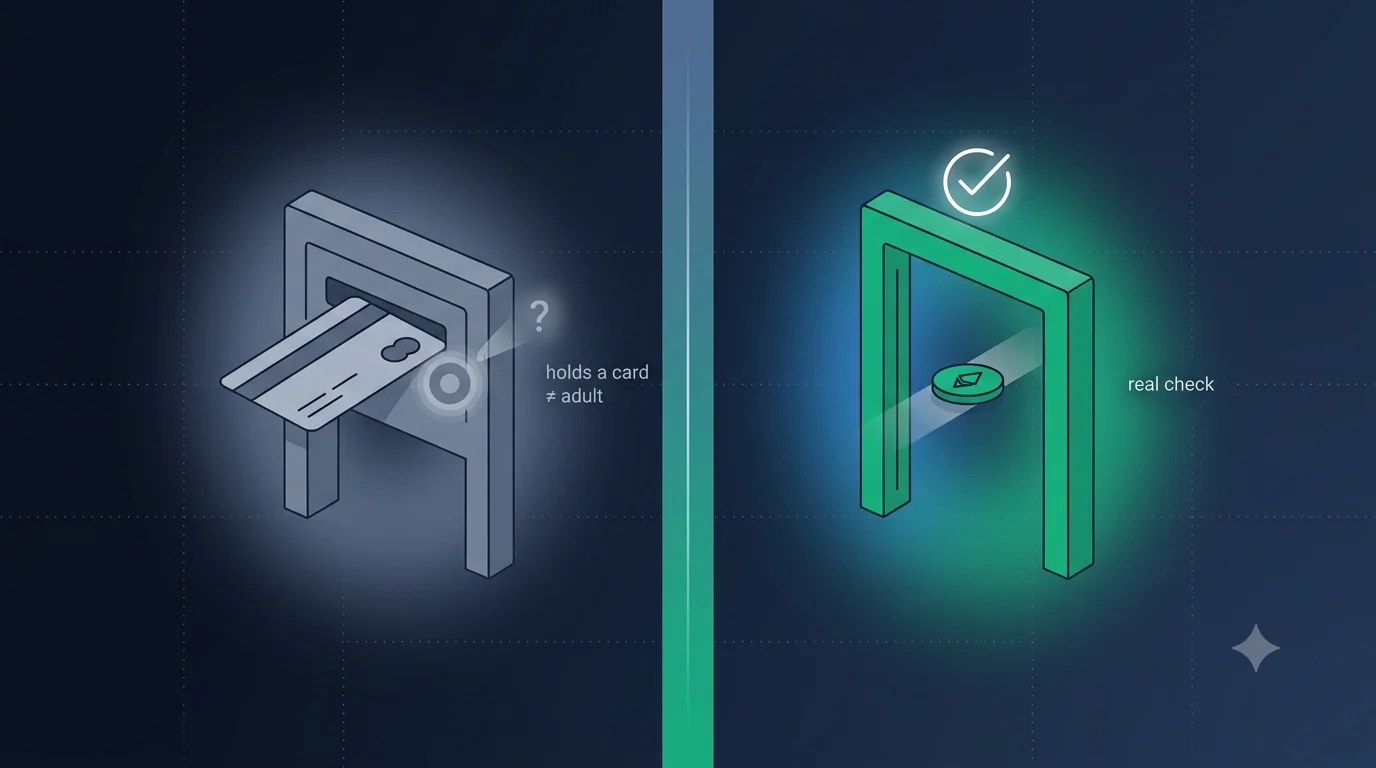
A credit card and an age-threshold proof shown side by side, illustrating that a payment instrument is not an identity document and a card on file does not prove the holder is an adult
compliance ·

A Credit Card Is Not an Age Check: Why 2026's Default Age Gate Quietly Fails

Discord and Steam are turning the credit card into their default age gate. But a card proves you hold a card — not that you're an adult. Here's why card-on-file age checks are correct in one country and wrong in the next, why proving age isn't the same job as proving parental consent, and what 'highly effective' age assurance actually requires.

credit-card-age-verification age-verification age-assurance
Concentric age-band rings around a chat bubble, showing communication tiers separating adults from younger users
industry ·

Age-Based Experiences: Why Child Safety Is Shifting From Gating Access to Segmenting Contact

Roblox now requires a facial age check to chat, sorting every user into one of six age bands and restricting who can talk to whom. This is the next phase of age assurance: not a yes/no gate, but a contact graph governed by estimated age. Here's the architecture, the regulatory drivers, and what operators of any social platform should build now.

age-verification age-estimation age-based-experiences
Prediction market interface with age verification shield overlay, representing identity compliance for event contract platforms
compliance ·

Age Verification for Prediction Markets: Why Kalshi, Polymarket, and Every Platform Operator Should Act Before the Prediction Market Act Does

36% of teen boys gambled in the past year and prediction markets are the newest loophole. With the Prediction Market Act of 2026 mandating age verification, platform operators face a compliance reckoning. Here's what's coming, what's failing, and how to build age assurance that actually works.

prediction-markets age-verification kalshi
Diagram contrasting centralized identity verification — data flowing to a single server — with a privacy-first on-device architecture where biometric data never leaves the user's phone
compliance ·

What the Persona-Discord Incident Reveals About Centralized Age Verification — and Why Architecture Choices Matter

When security researchers found Persona's entire government dashboard exposed on a public server, it validated what privacy advocates have argued for years: centralized identity verification creates honeypots. Here's what the incident means for platforms choosing an age verification vendor in 2026.


persona-breach discord-age-verification centralized-verification

Stay updated

Get the latest insights on age verification and compliance delivered to your inbox.